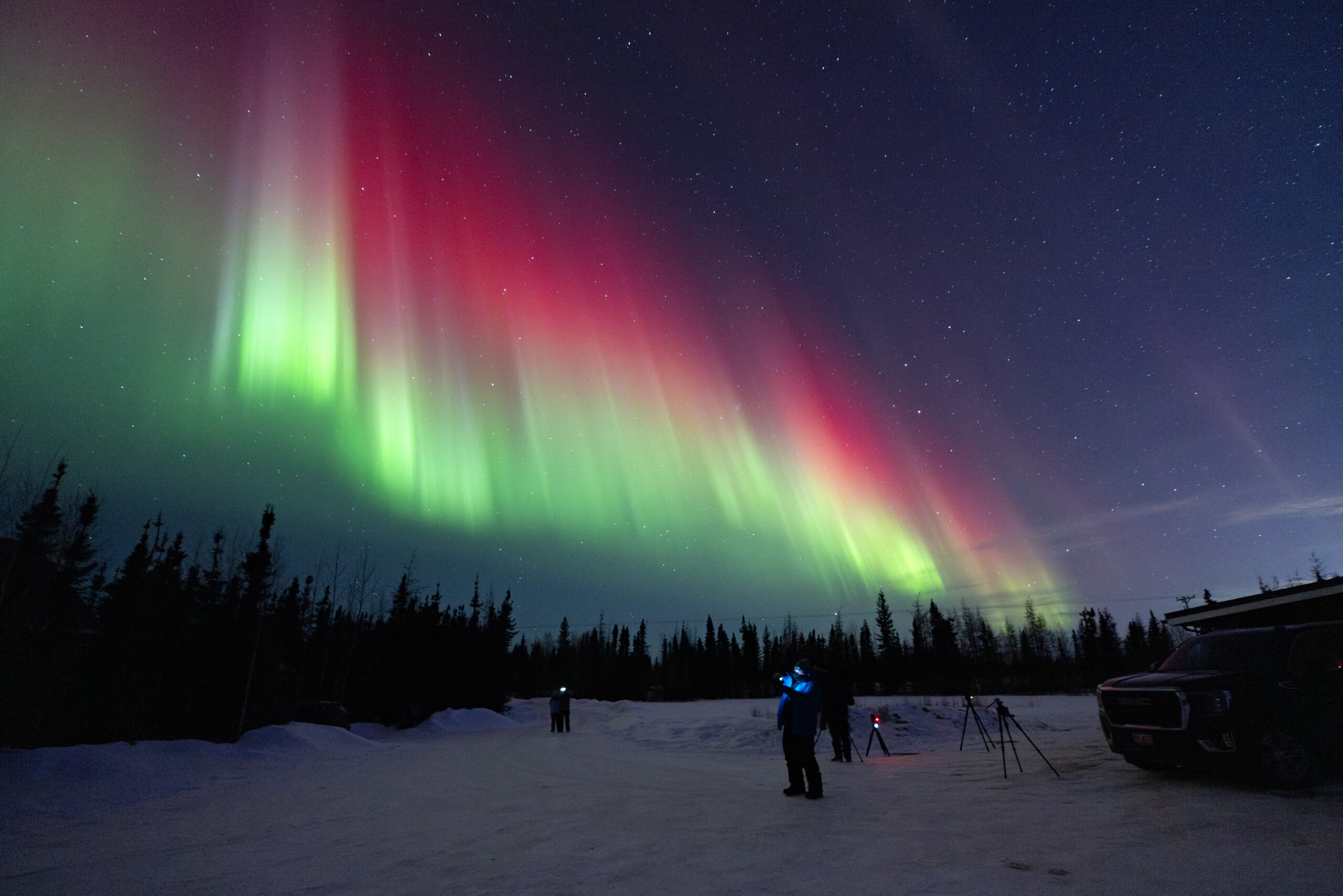
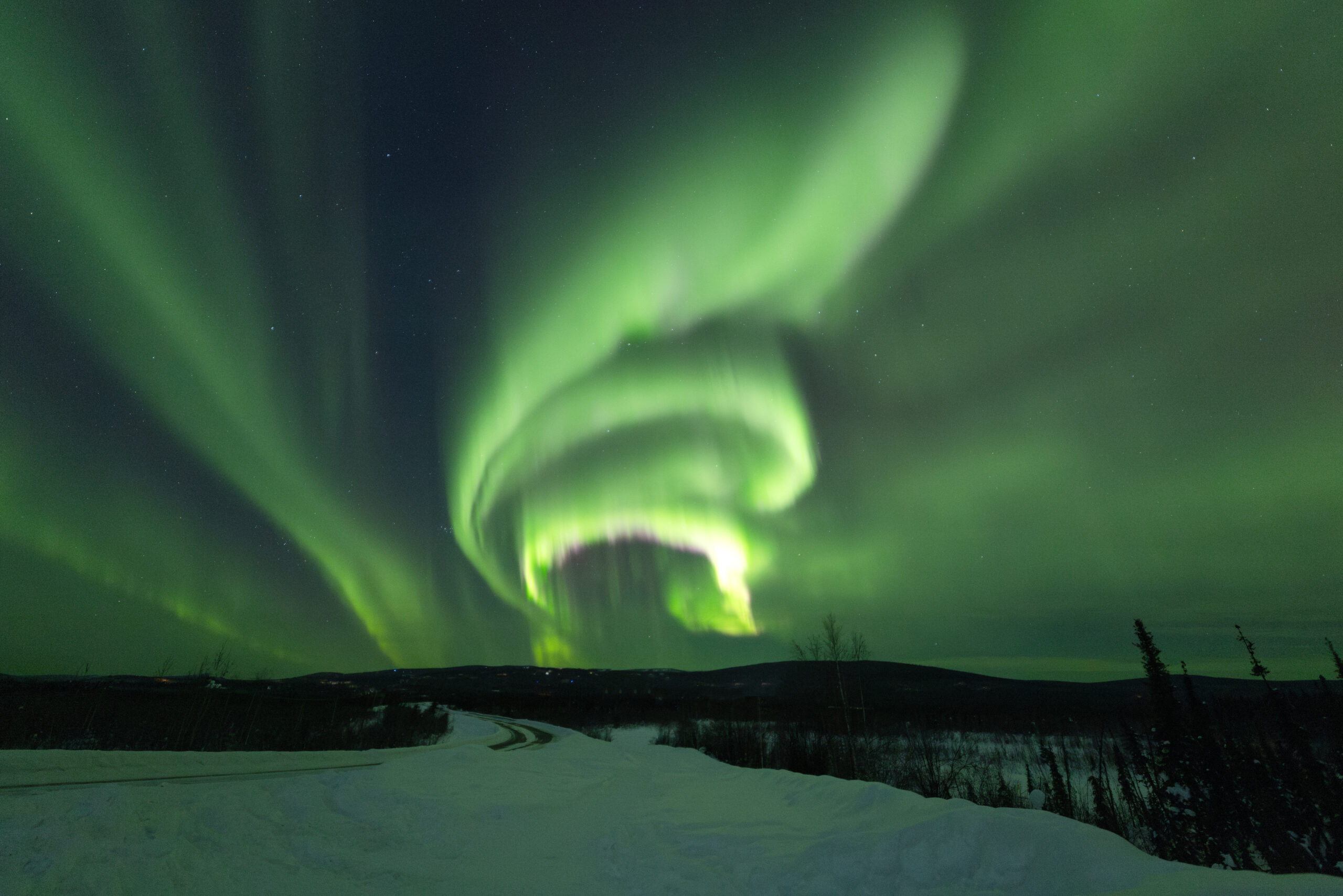
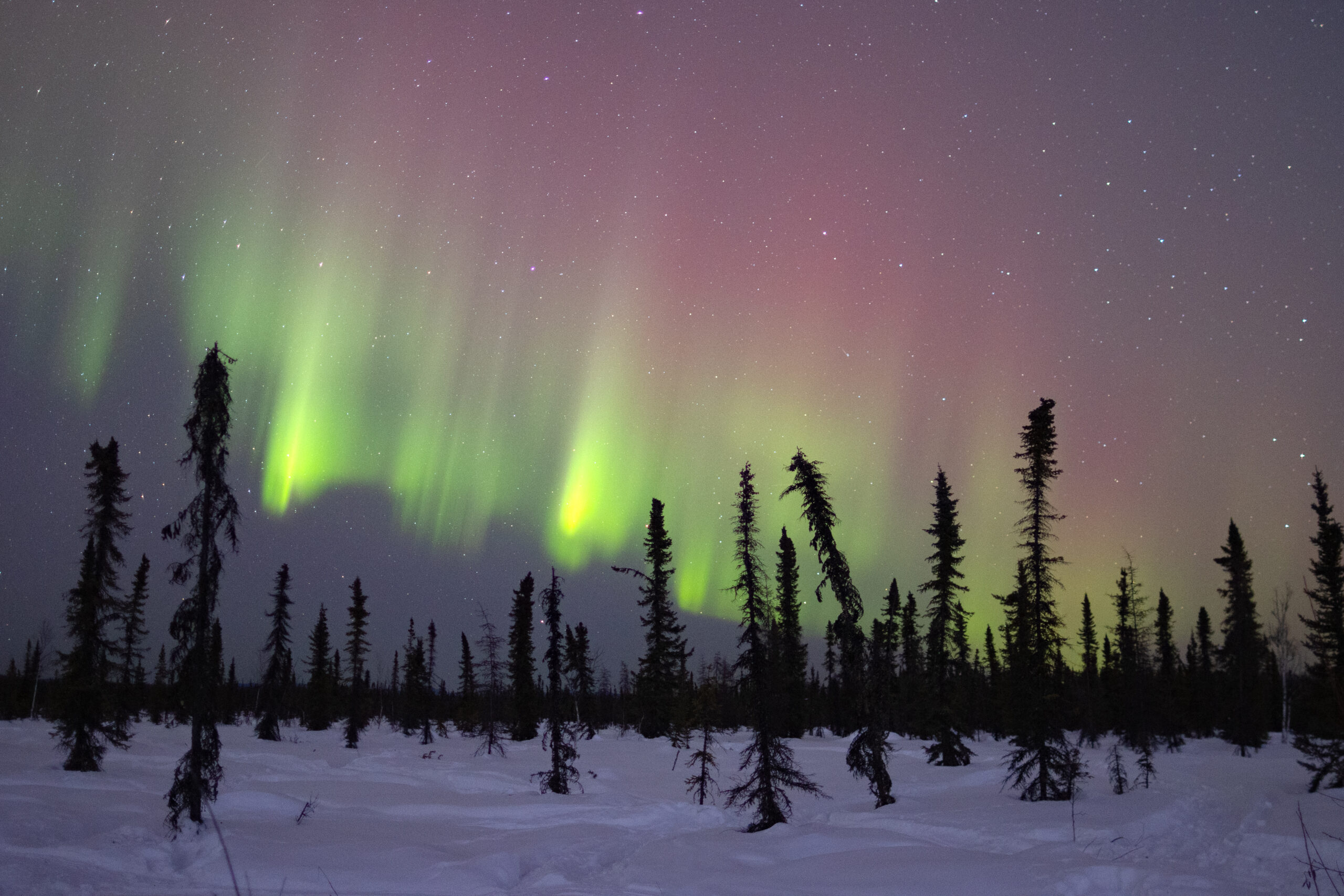
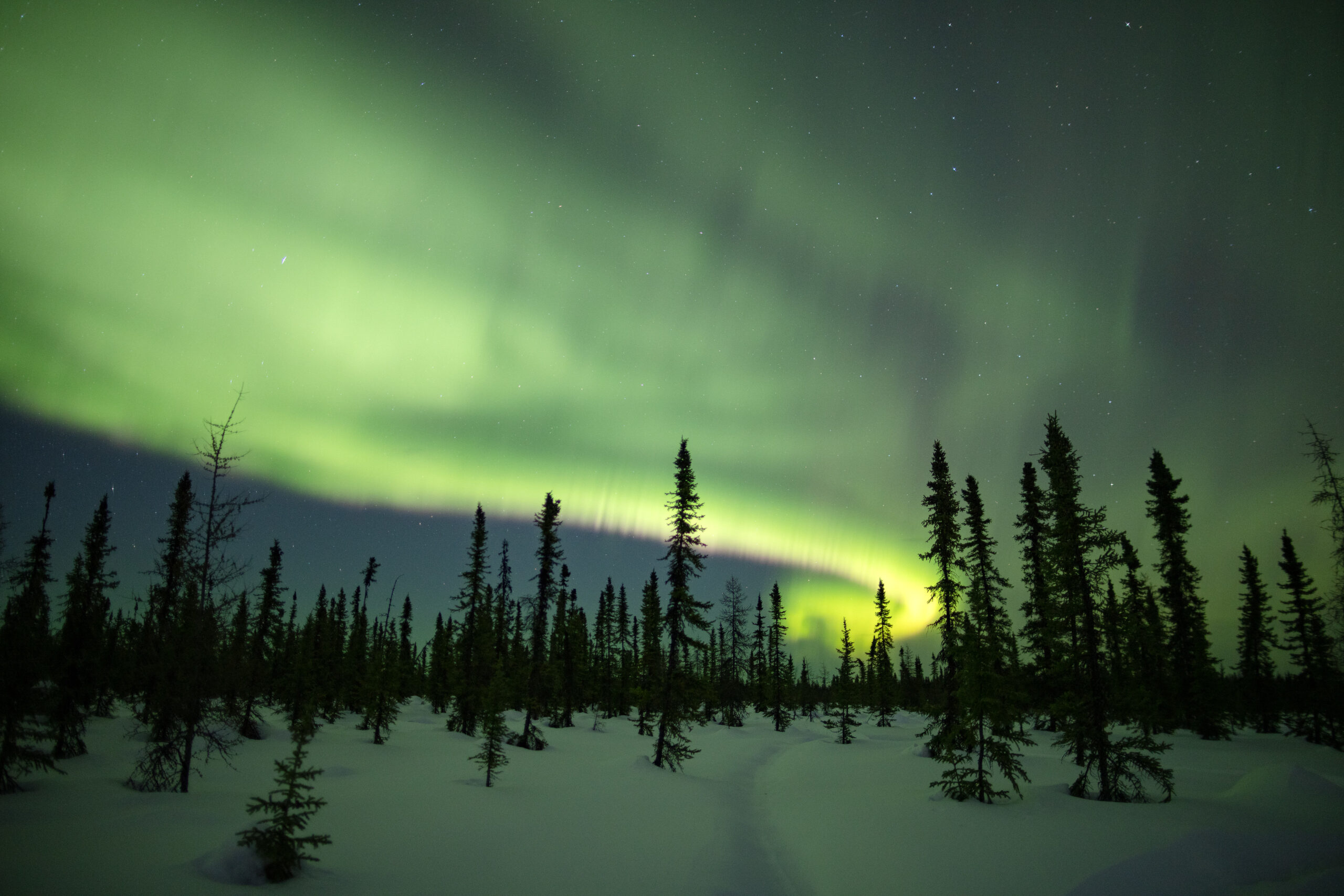
There is a specific kind of quiet that only exists in the Alaskan wilderness at two o’clock in the morning. Standing out on the frozen expanse of the Interior, with temperatures hovering well below zero, you quickly forget about the biting cold the exact moment the sky fractures into ribbons of luminous green and deep violet. Chasing the Aurora Borealis is a bucket list dream for travelers worldwide, and there is no better staging ground on Earth to witness it than Fairbanks, Alaska. Situated directly beneath the high activity Auroral Oval, this subarctic city offers some of the most reliable and breathtaking celestial light shows on the planet. But successfully catching the lights takes more than just looking up. It requires strategy, and patience.
After spending time photographing the Northern Lights in Fairbanks, I can confidently say it is one the best places in the world to experience and photograph this incredible display.
Why Fairbanks?
Located just below the Arctic Circle, Fairbanks sits directly directly beneath the ”Auroral Oval”, a ring shaped zone where aurora activity is most frequent. Combined with long winter nights and relatively low precipitation, Fairbanks offers excellent opportunities to witness the Northern Lights throughout the aurora season.
Best Time to Photograph the Northern Lights
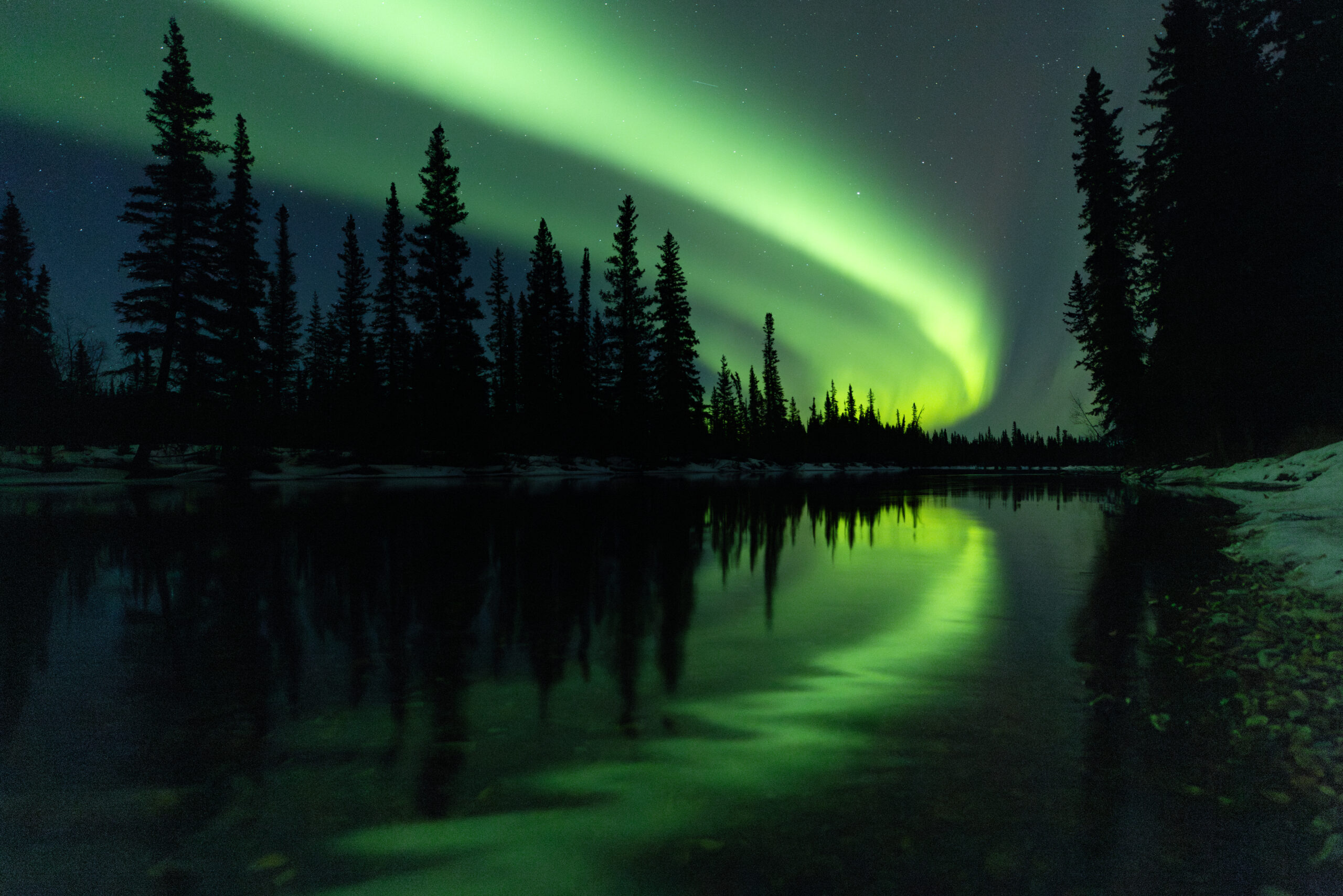
The peak season for Northern Lights photography in Fairbanks runs from September through March. During these months, darkness arrives early and provides long hours for aurora viewing. Some of my favorite conditions occur during winter when snow covered landscapes reflect the glow of the aurora.
In my opinion a full or nearly full moon floods the night sky with natural light pollution, washing out the delicate gradients of the northern lights and causing the deep space background to turn a dull, hazy blue. Some people like to have full moon or nearly full moon because it’s a big advantage to use lower ISO and having a brighter foreground. For me, choosing to shoot during a new moon phase ensures a pitch black canvas, allowing the aurora’s true brightness, intricate vertical pillars, and subtle crimson or violet fringes to pop with maximum color saturation. Furthermore, without a heavy moon overpowering the scene, you do not have to fight severe lens flare or struggle with overexposed foreground snow, giving you complete creative control to capture the most intense, high contrast images possible.
The best time of year to photograph the northern lights in Fairbanks is during the official aurora season from August 21 to April 21, with the absolute peak windows occurring around the equinoxes (September and March) and the deep winter months (December to February).
Gear I Use:
Sigma 14mm f/1.8: My dedicated, go to aurora lens. The ultra wide field of view captures vast curtains of light, while the incredibly fast f/1.8 aperture lets in maximum light to keep my ISO lower and shutter speeds fast enough to freeze fast-moving aurora ribbons.
Canon R5 Mark II: My primary body for extreme resolution and low light performance.
Sony a7S III + Sigma 14mm f/1.4 DG DN Art: For real-time video capture. Its legendary low-light performance and large pixels allow me to record the actual, high-speed dancing motion of the curtains in real time, rather than relying on traditional time-lapses.
When shooting the aurora in the Alaskan interior, the extreme cold is your biggest adversary. Temperatures can easily plunge past -20°F (-29°C), causing chemical reactions inside camera batteries to slow down significantly and drain power at an alarming rate. To ensure my gear survives a long night under the lights, I always pack a minimum of 6 to 8 fully charged batteries for a single night out. Running multiple high drain bodies especially the Sony a7S III shooting real-time video and the Canon R5 Mark II processing high-res files demands a massive power reserve.
Carbon Fiber Over Aluminum: I strictly use heavy duty carbon fiber tripods. Aluminum tripods act like ice conductors, transferring freezing temperatures rapidly up to your camera, and the metal can become incredibly brittle and painful to handle with bare hands. Carbon fiber dampens vibrations much better in high winds and handles deep sub-zero temperatures without warping. When i’m shooting on thick river ice, packed snow, or frozen permafrost, standard rubber tripod feet will slide and drift. I Swap them out for stainless steel spikes. Stomping these spikes deep into the ice ensures my tripod will not budge, even during a long exposure time-lapse.
Navigating the Ice: Why Safety is My Absolute Top Priority
Chasing the aurora means driving in the dead of night on some of the most challenging roads in North America. In the Alaskan interior, highways like the Elliott or Dalton, and mountain passes, are routinely covered in packed snow, black ice, and deep ruts. When you join my tour, your safety is my absolute top priority. I treat winter driving with the utmost respect and caution, ensuring you can focus entirely on the sky while I handle the road. I do not rush. Winter driving requires patience, expanded braking distances, and slow, deliberate inputs. I strictly monitor local DOT road weather alerts, drive at speeds tailored to the actual road conditions rather than the posted limit, and maintain a massive buffer zone around our vehicle. If weather or road alerts showing very high chances of ice/snow danger, I try to avoid them and plan for safer route.
Join Me in March: Experience the Magic Firsthand
If you are ready to stop guessing and start shooting, the absolute best way to experience this cosmic display is to let an expert handle the logistics. Every March, I host an exclusive, small-group Northern Lights – Fairbanks, Alaska designed for everyone, whether you are a seasoned photographer trying to get the perfect shot or a bucket list traveler who simply wants the ultimate viewing experience. March is statistically the single most active month of the year for geomagnetic activity, and my track record speaks for itself. Virtually every single year, my tour group has successfully witnessed the aurora every single night of the trip.
Zero stress, maximum viewing, you do not have to worry about reading confusing solar charts, hunting for clear skies alone in the dark, or navigating dangerous frozen mountain passes. I handle all the arctic driving, monitor real time weather satellites, and guide you directly to the clearest, darkest locations around Fairbanks.
👉 [Click Here to View Tour Details and Secure Your Spot for an Upcoming March!]
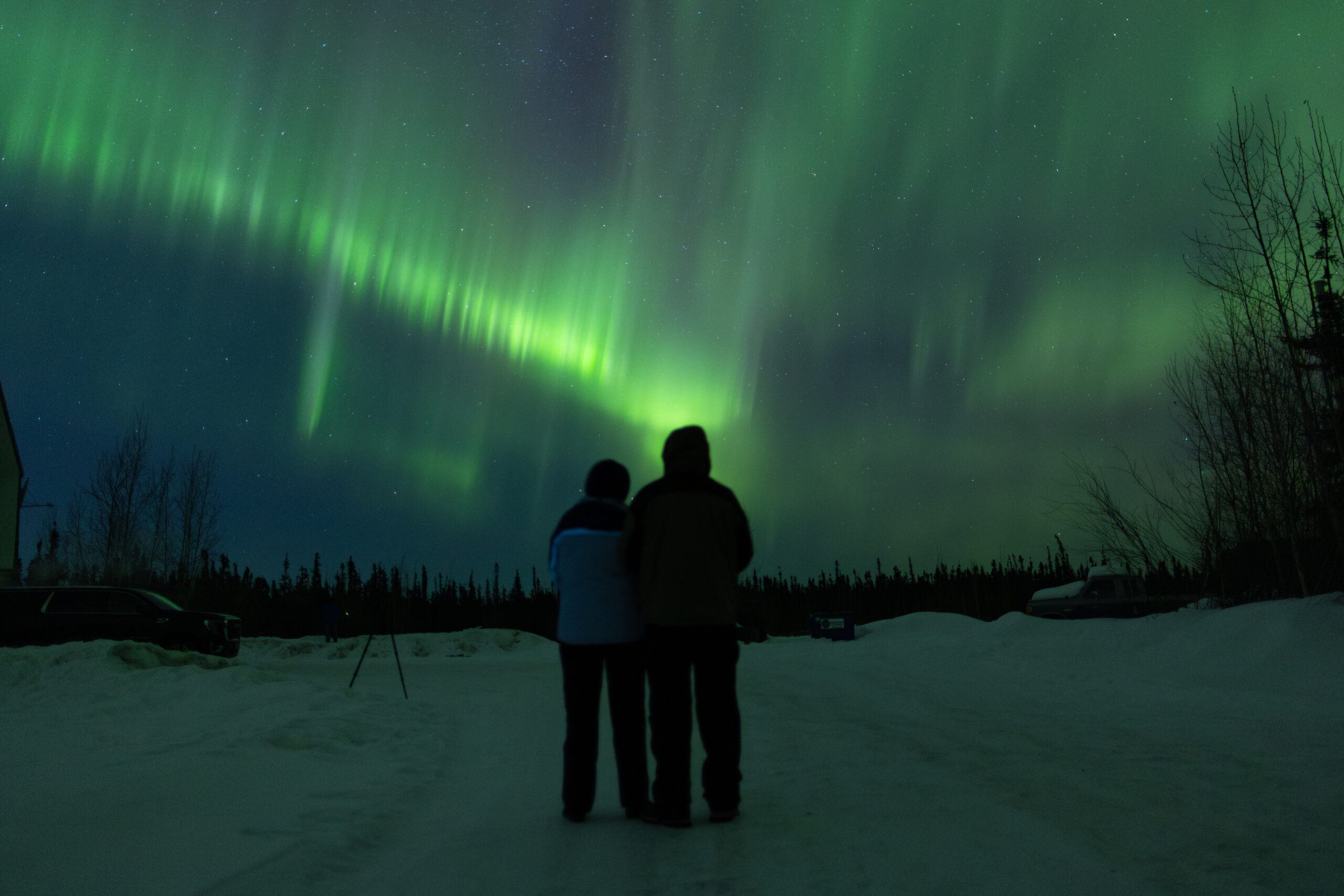
Additional Images
Follow along for more wildlife encounters, photography stories, and future tours!