
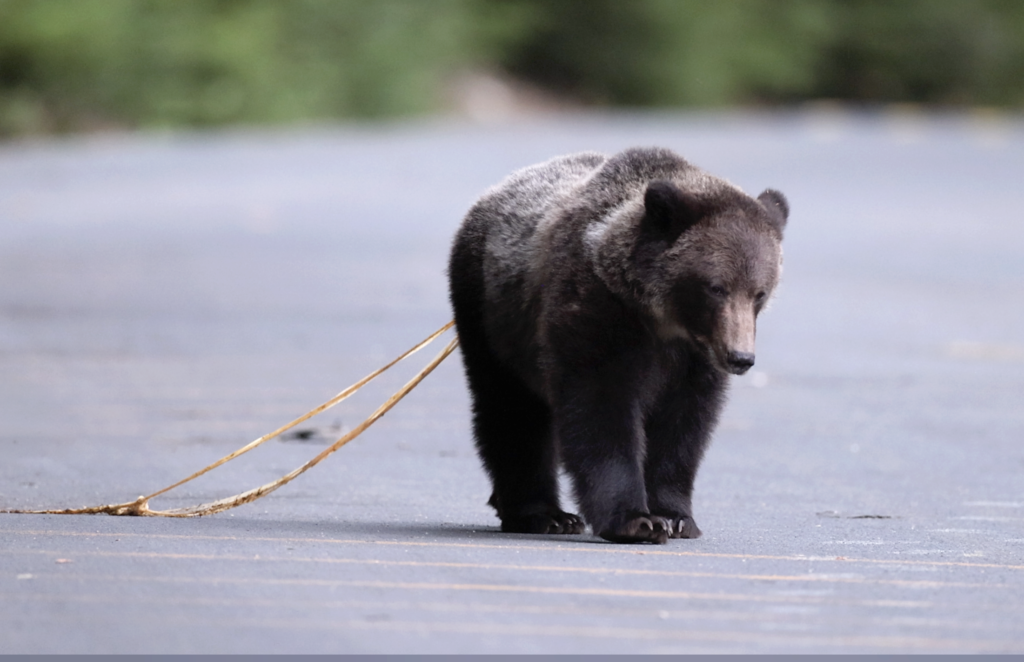
The Truth About the Alaskan Bear Cub and the 30-Foot Tapeworm
September 2023, I captured and posted a footage of a small Alaskan bear cub trailing a massive white “rope” behind it, I knew it was a striking image. But I didn’t realize it would completely take over the internet. Within just days of posting the video, millions of you have watched, shared, and asked me the exact same question: Marc, what on earth is that bear dragging, a parachute, AI?
As a wildlife photographer, I see a lot of raw, unfiltered moments in nature. But this particular encounter left a lot of people both fascinated and completely stomach turned.
To clear up the rumors and the wild theories in my comments section, here is the real story behind that viral video.
It Wasn’t Trash, It Was a Giant Parasite
When you first look at the video, it looks like the cub got caught in some plastic debris, a parachute cord, or a piece of discarded rope.
Unfortunately, the truth is entirely biological. What you are seeing is a massive, living broad fish tapeworm(Diphyllobothrium species) being naturally expelled by the cub.
While it looks deeply alarming to human eyes, wildlife biologists will tell you that this is a completely natural part of the Alaskan ecosystem.
How the Lifecycle Works
So, how does a cub end up with a parasite this massive? It all comes down to the diet that keeps Alaska’s bears alive:
- The River System: Tapeworm eggs hatch in freshwater rivers and are eaten by tiny crustaceans.
- The Salmon: Migrating salmon eat those infected crustaceans, housing the larvae in their muscle tissue.
- The Feast: When brown bears gorge themselves on raw salmon to fatten up for winter, they ingest the tapeworm larvae. Once inside the bear’s digestive tract, the tapeworm anchors itself to the intestinal wall and begins to grow at an astonishing rate.
Just How Long Can They Get?
Inside the high-calorie digestive tract of an Alaskan brown bear, a single broad fish tapeworm can regularly grow up to 30 feet (9 meters) long.
Because the worms grow by constantly adding new ribbon-like segments, they eventually reach a point where the bear’s body naturally sheds them. When a bear defecates, entire lengths of the worm can slide out. Because the parasite is so incredibly long, it can take quite a while to completely pass, leaving the bear to walk around trailing a “streamer” through the woods.
Is the Cub Okay?
Watching that young cub walk down the road dragging a long parasite looks tragic, but nature is highly resilient.
I want to reassure everyone who was worried: the cub is likely perfectly fine. While a heavy parasite load can occasionally cause an animal to lose weight, most wild bears manage the infection without any issues. The tapeworm’s survival depends entirely on keeping its host alive. Once the worm sheds its segments back into the environment, the cycle simply resets for the next generation of salmon and bears.
Follow along for more wildlife encounters, photography stories, and future tours!