
In February 2024, I had the privilege of traveling to the Falkland Islands in collaboration with the Falkland Islands Government. As a California-based wildlife photographer, journeying to this remote group of islands in the south Atlantic Ocean. was an epic undertaking. The transit required a long flight down the spine of South America to Chile, a connection to the wind-swept southern city of Punta Arenas, and a final hop over the ocean. In total, it took two full days of travel to arrive in Stanley, the capital of the Falkland Islands.
The Edge of the World: History and Remoteness
The Falkland Islands define the very concept of geographical isolation. Located roughly 300 miles east of South America’s southern tip, this remote group of islands in the south Atlantic Ocean consists of two main islands, East Falkland and West Falkland along with hundreds of smaller islets. Historically, their strategic position made them a crucial maritime outpost. First sighted by European navigators in the late 16th century, the islands saw successive French, British, and Spanish settlements over the centuries.
The most defining chapter of their modern history occurred in 1982 during the 74 day Falklands War between Argentina and the United Kingdom. Today, the islands thrive as a British Overseas Territory. Because they remain far off the beaten track, the islands serve as a pristine, virtually untouched sanctuary where wildlife completely rules the rugged coastlines.
A Penguin Photographer’s Paradise
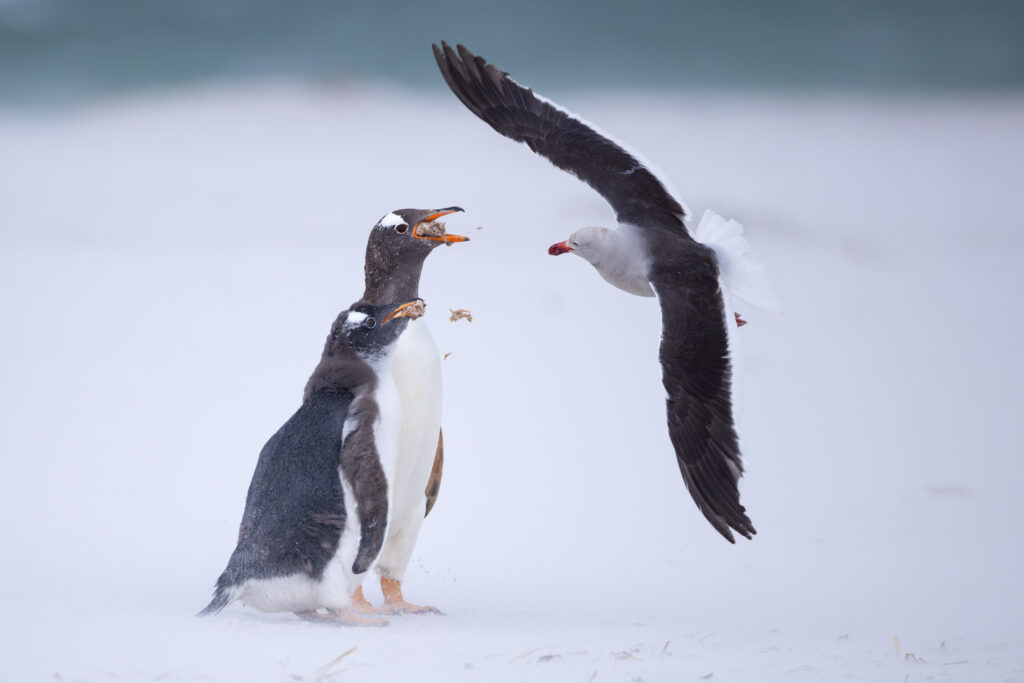
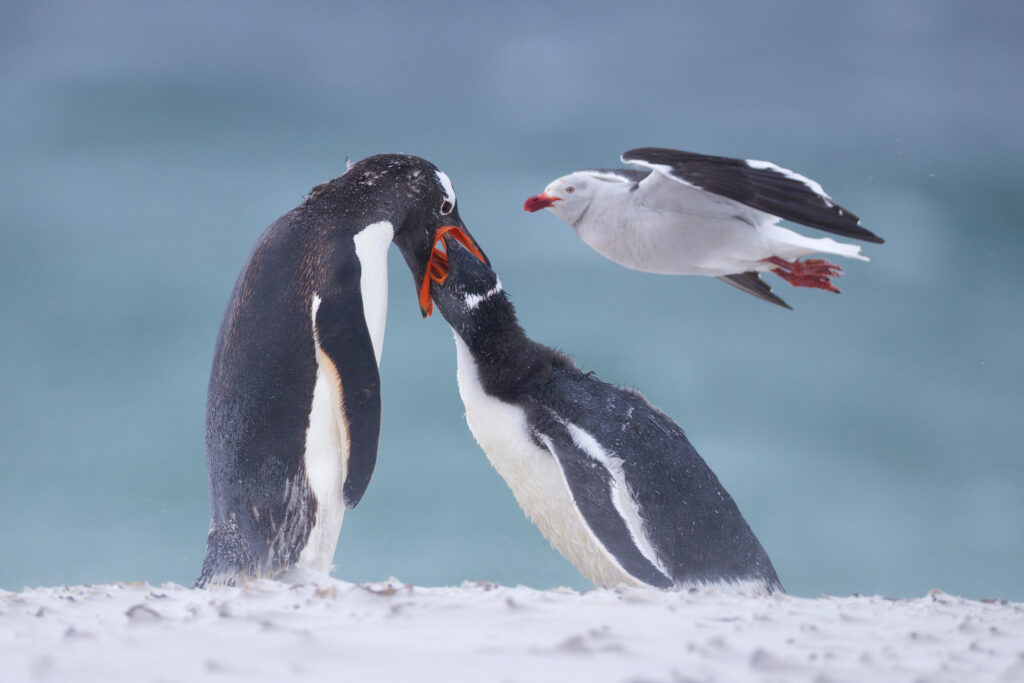
The Falkland Islands are home to over one million penguins across five distinct breeding species. For a photographer, the lack of fear these birds demonstrate is staggering. Because they have no natural land predators here, they simply go about their daily routines right in front of your lens.
My itinerary allowed me to spend a dedicated 4 to 5 hours each morning and afternoon sitting quietly beside a different colony, capturing their raw, natural behaviors. Armed with my Canon R5, Canon 600mm f/4, 24-70mm, and 100-500mm lenses, I was able to document an incredible variety of species:
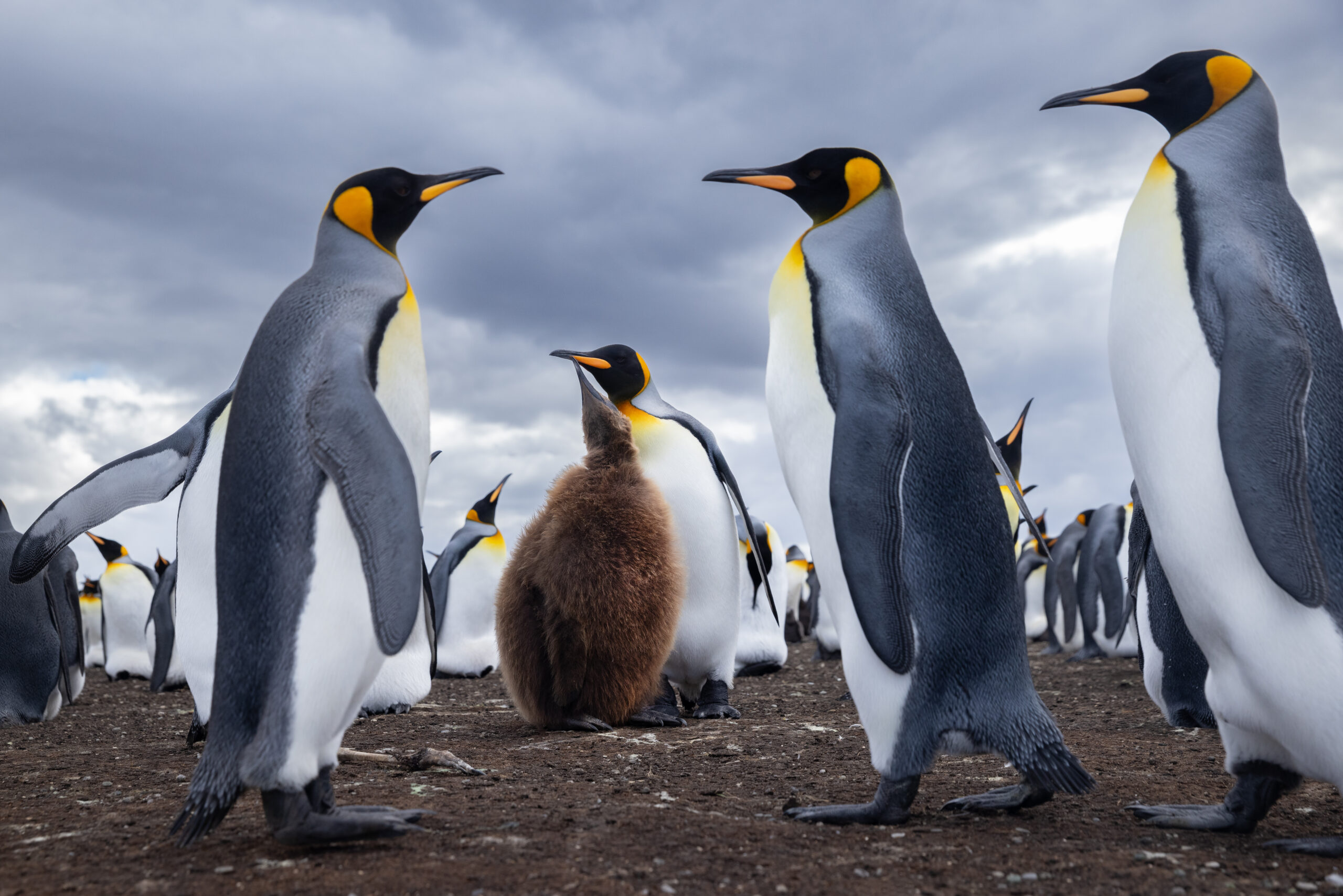
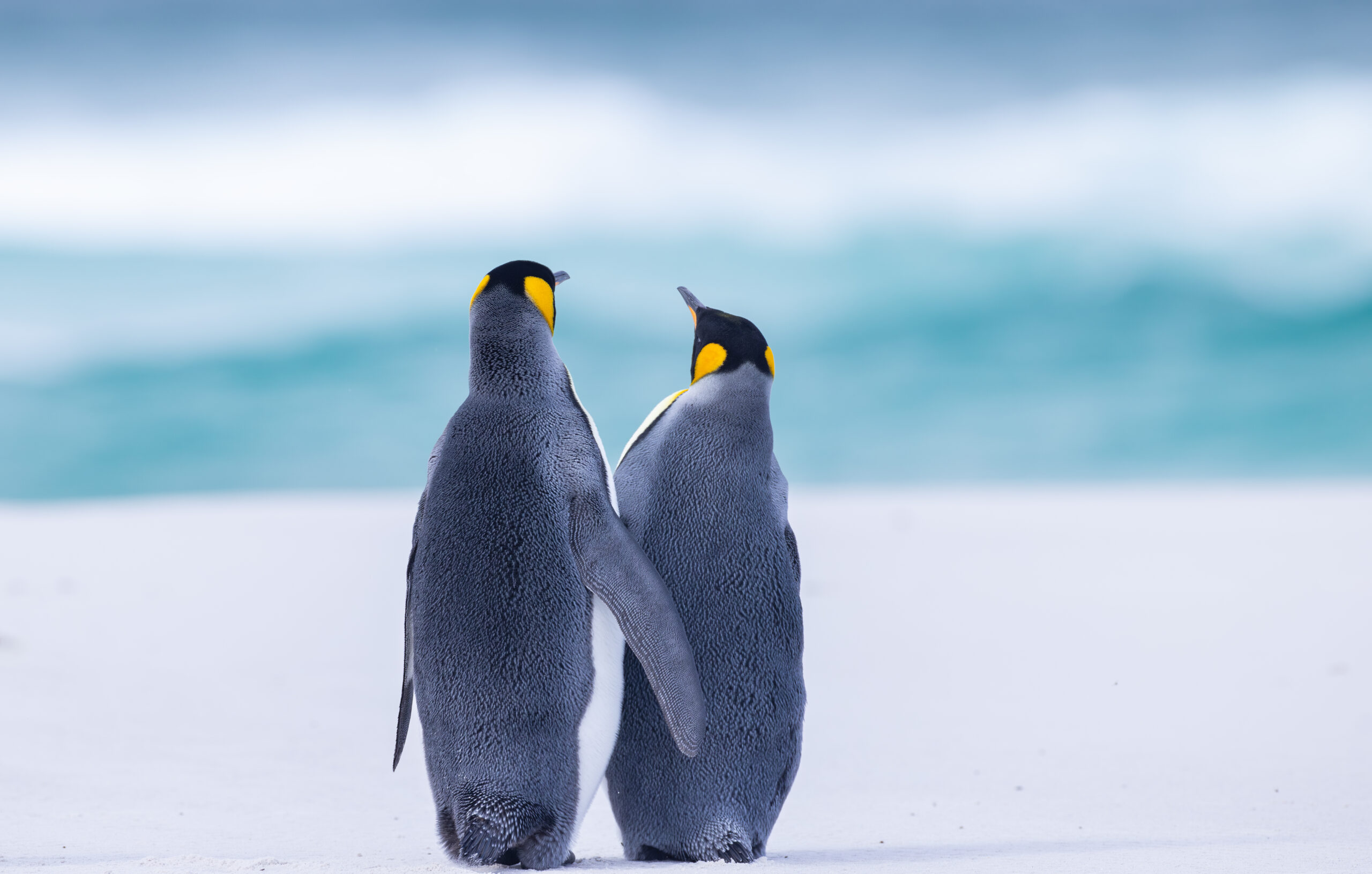
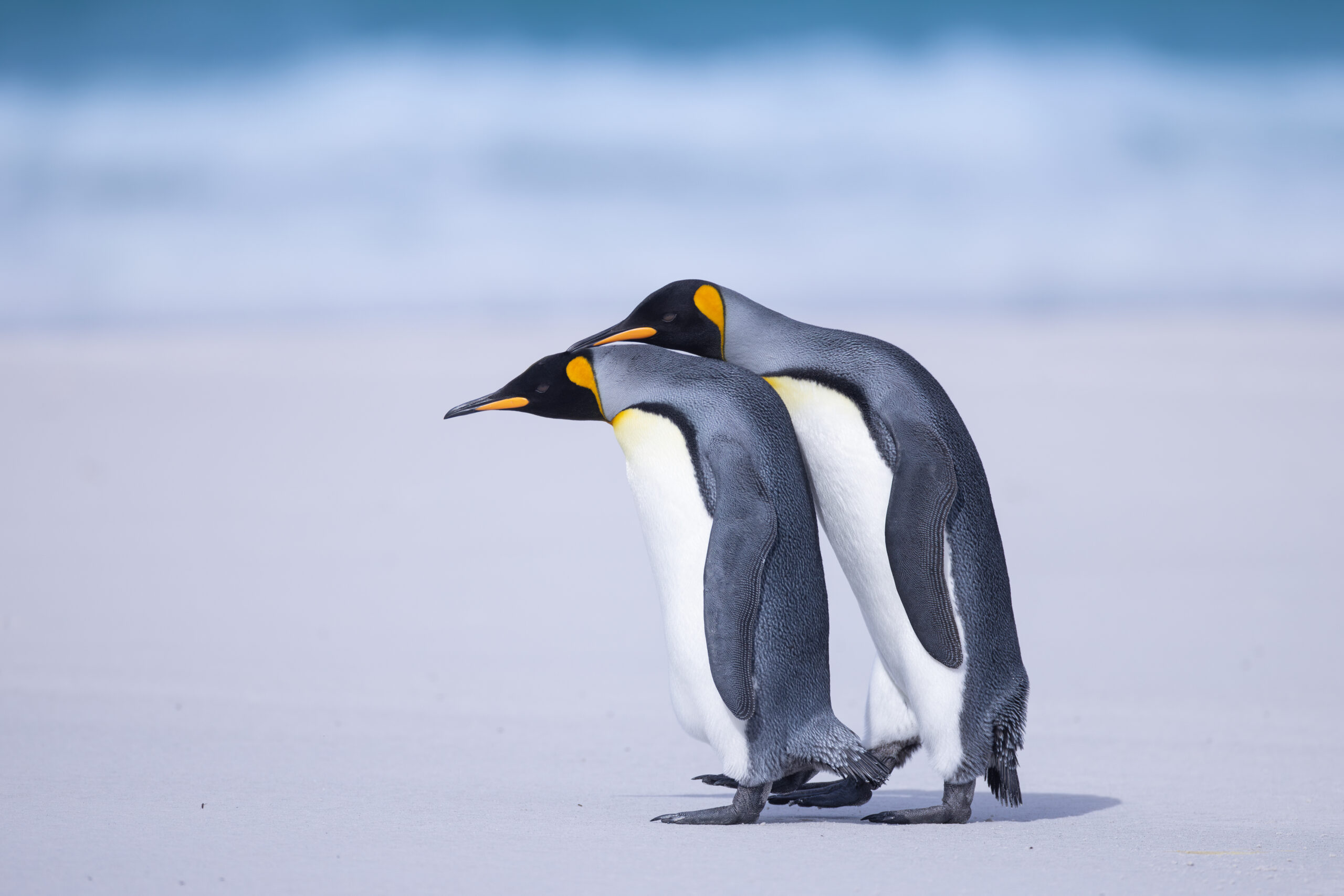
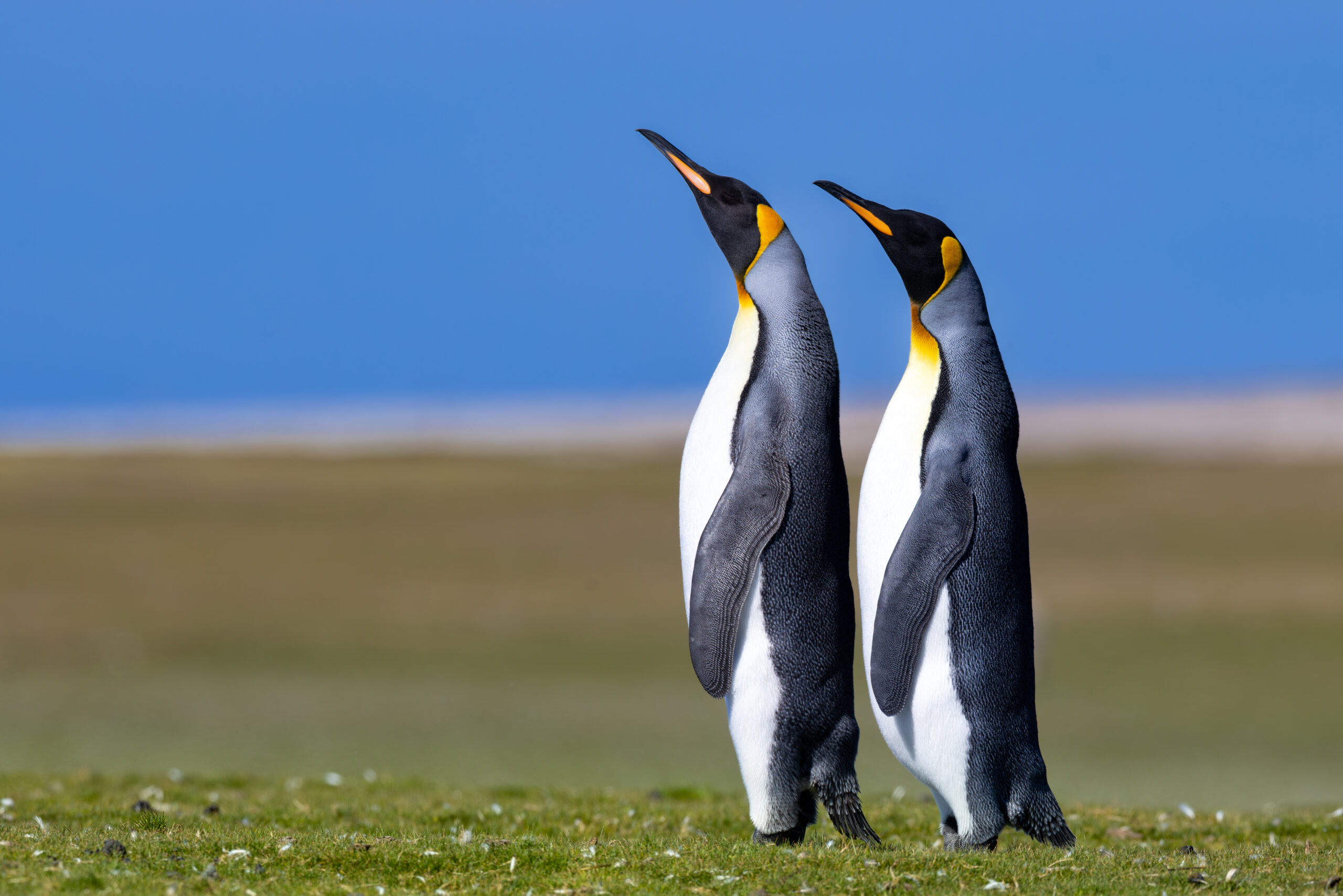
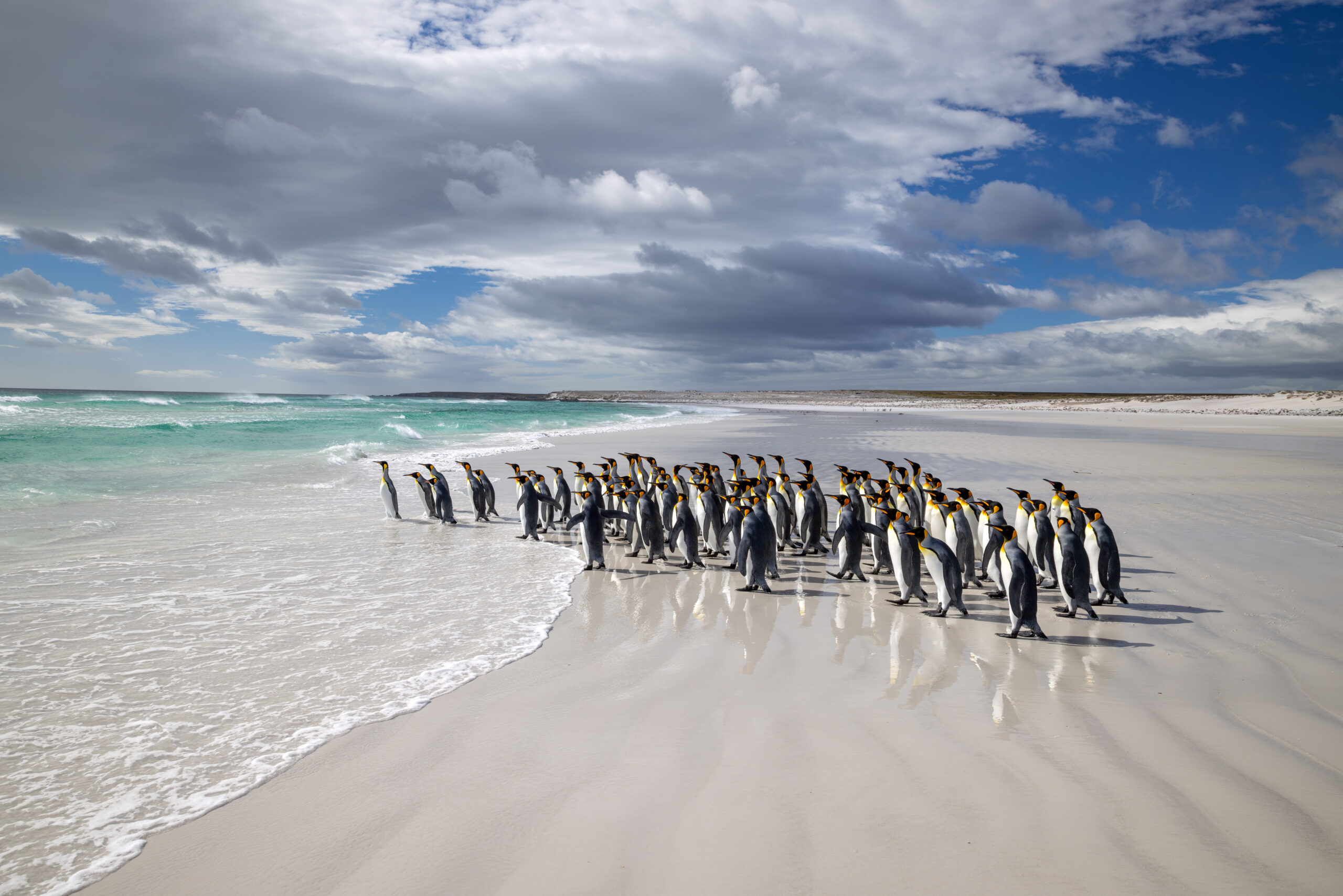
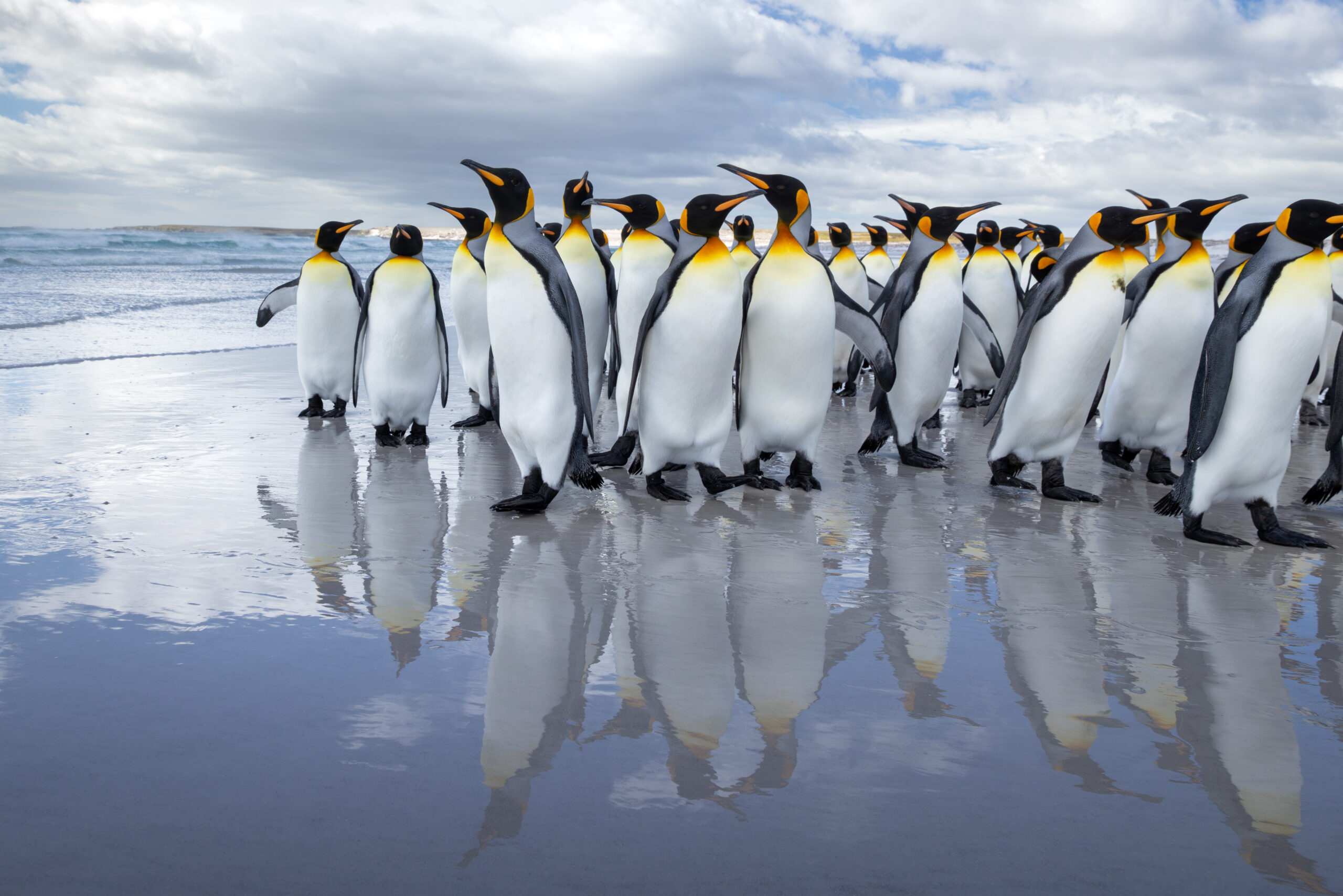
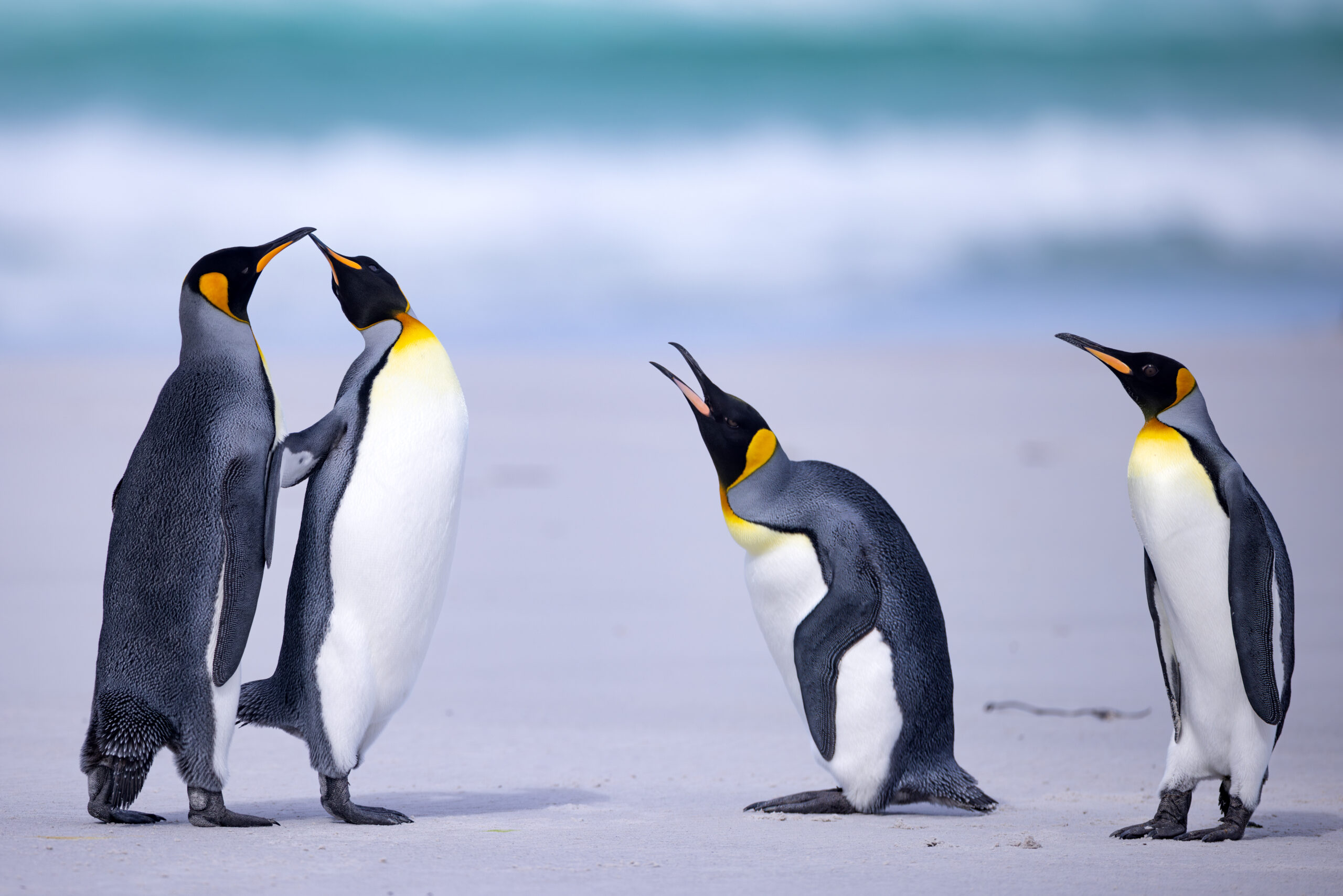
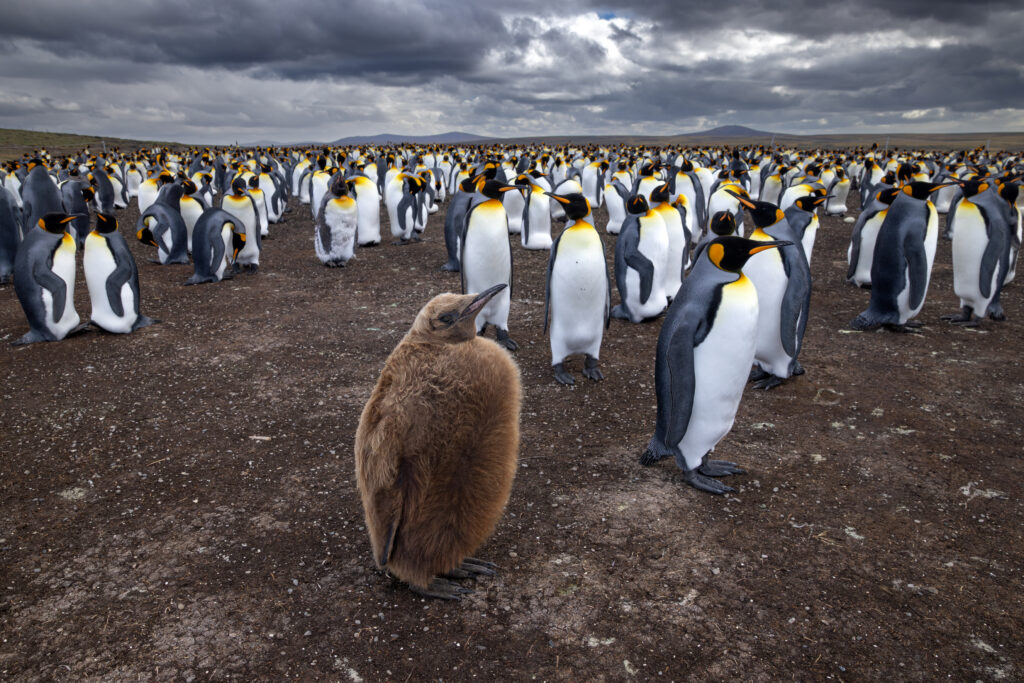
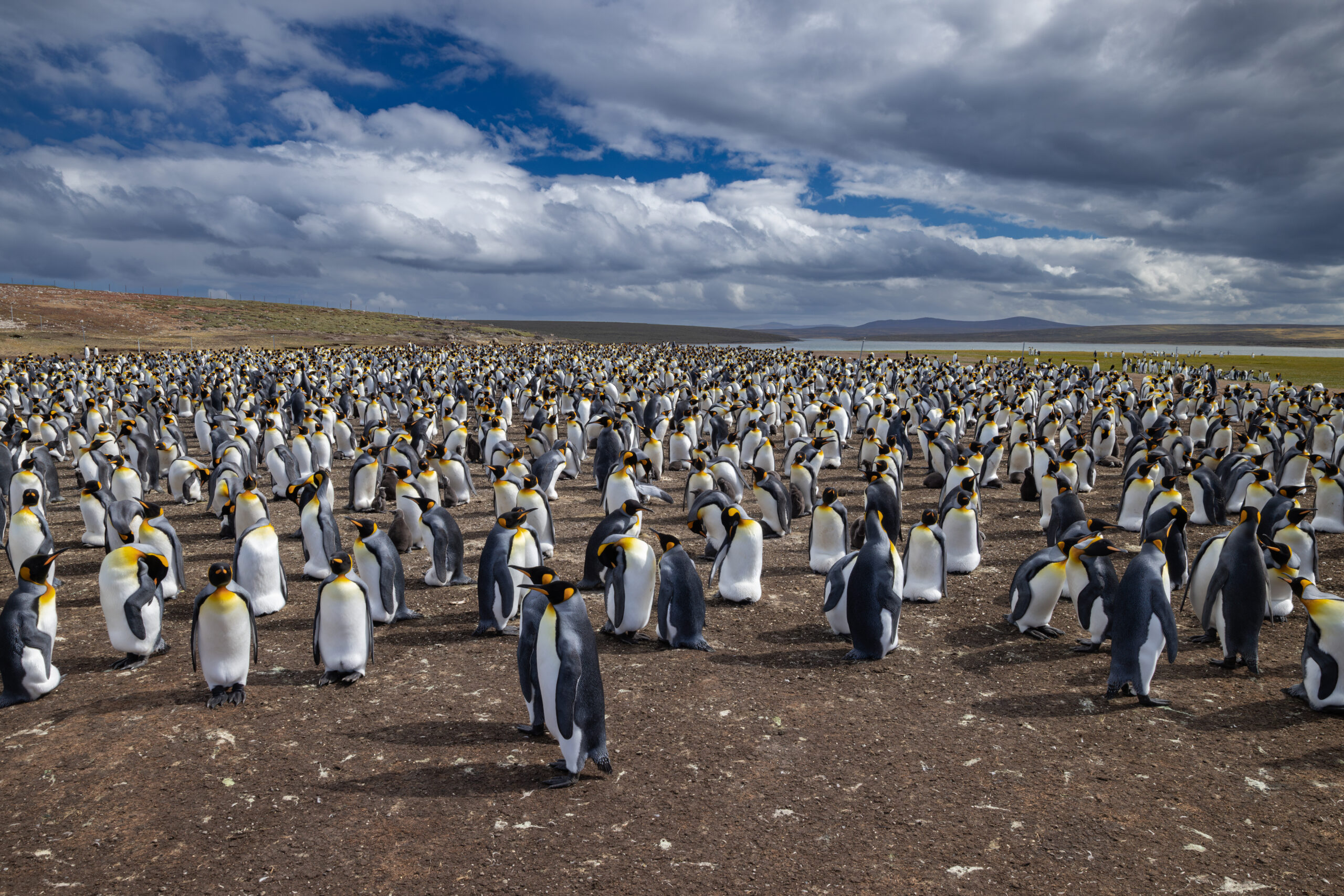
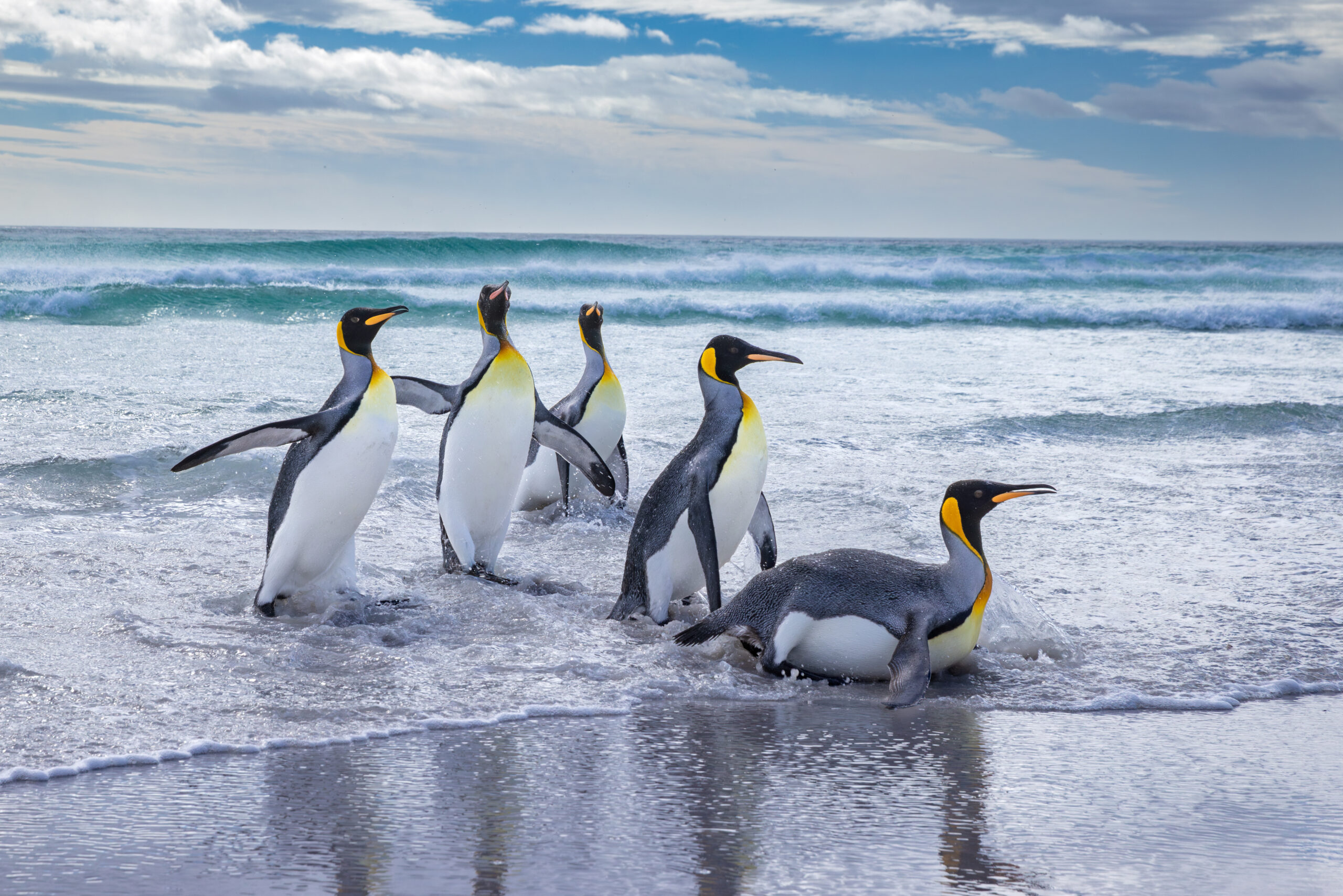
- King Penguins: Regal and massive, boasting brilliant orange plumage around their necks.
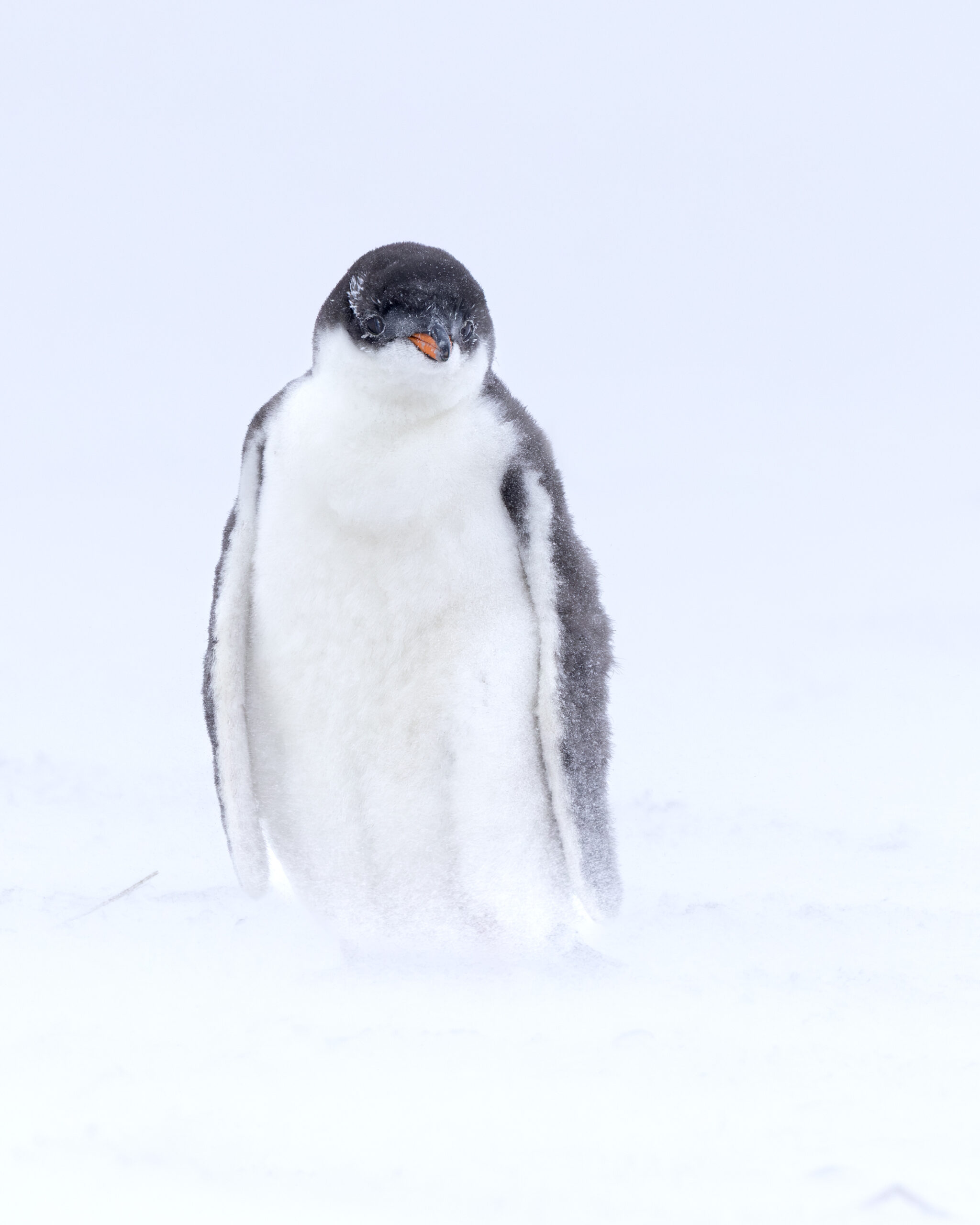
- Gentoo Penguins: Fast-moving and charismatic, easily identified by the bright white “bonnet” stripe across the top of their heads.
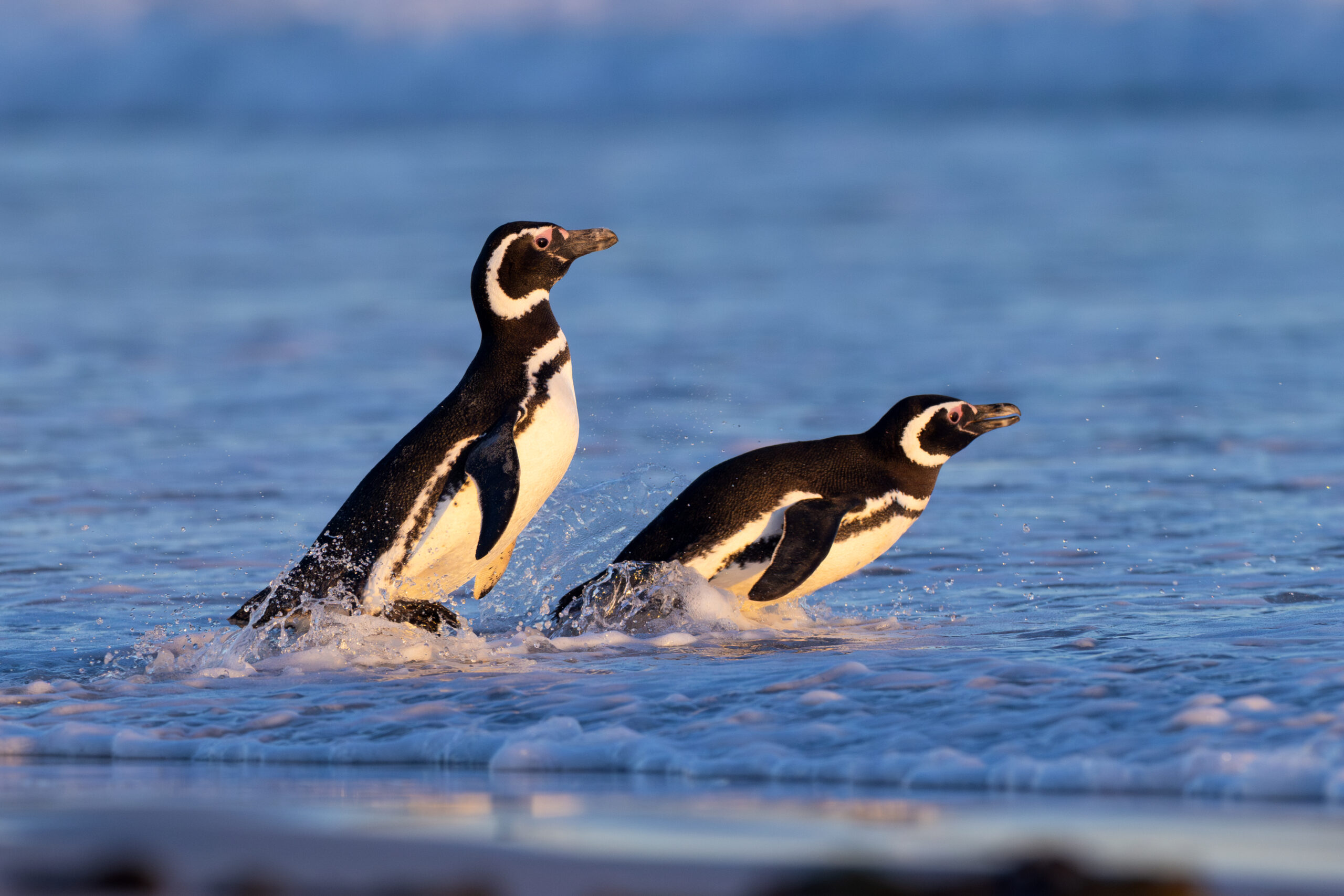
- Magellanic Penguins: Subterranean dwellers that dig deep burrows into the peat, known locally as “Jackass” penguins due to their distinct, braying calls.
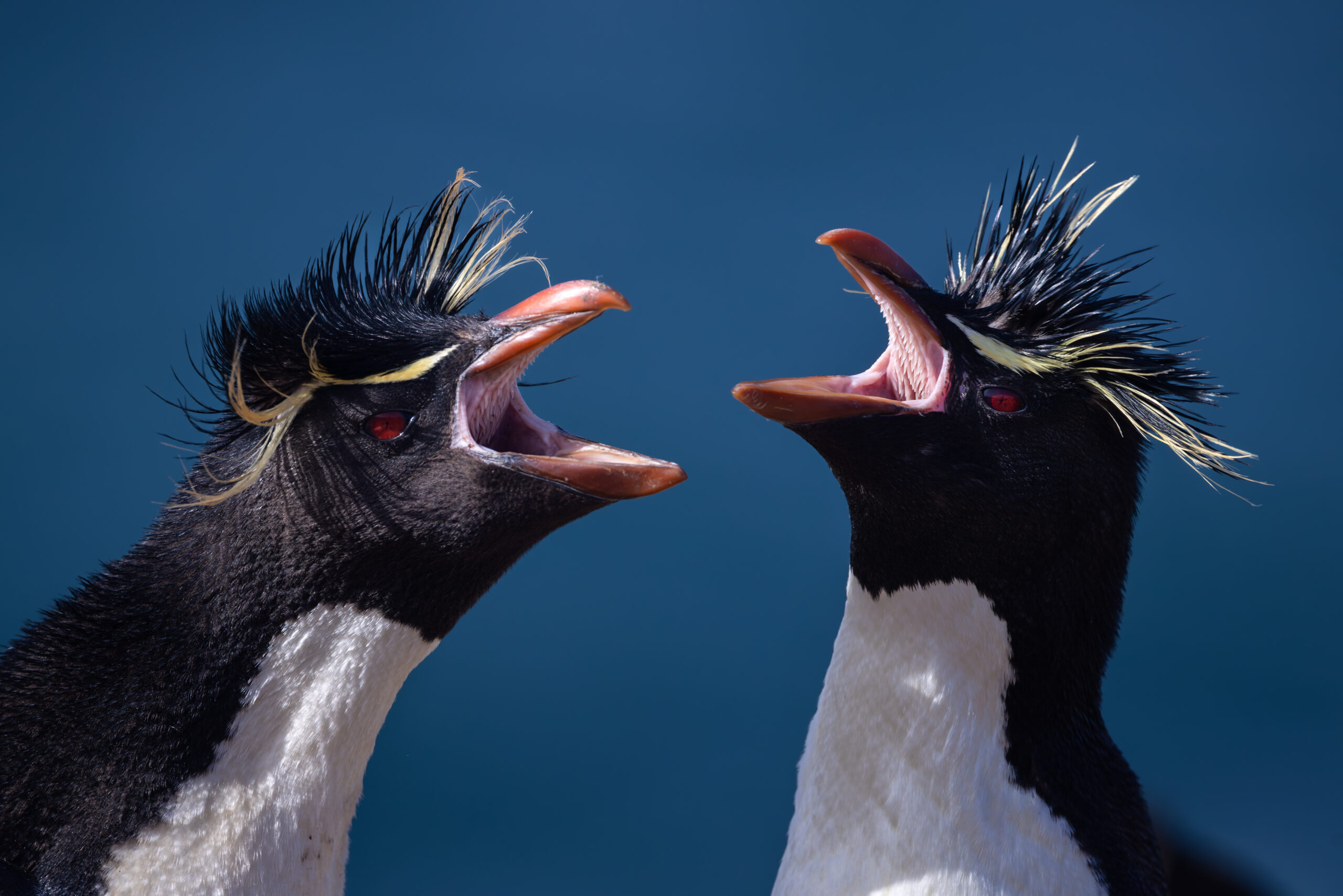
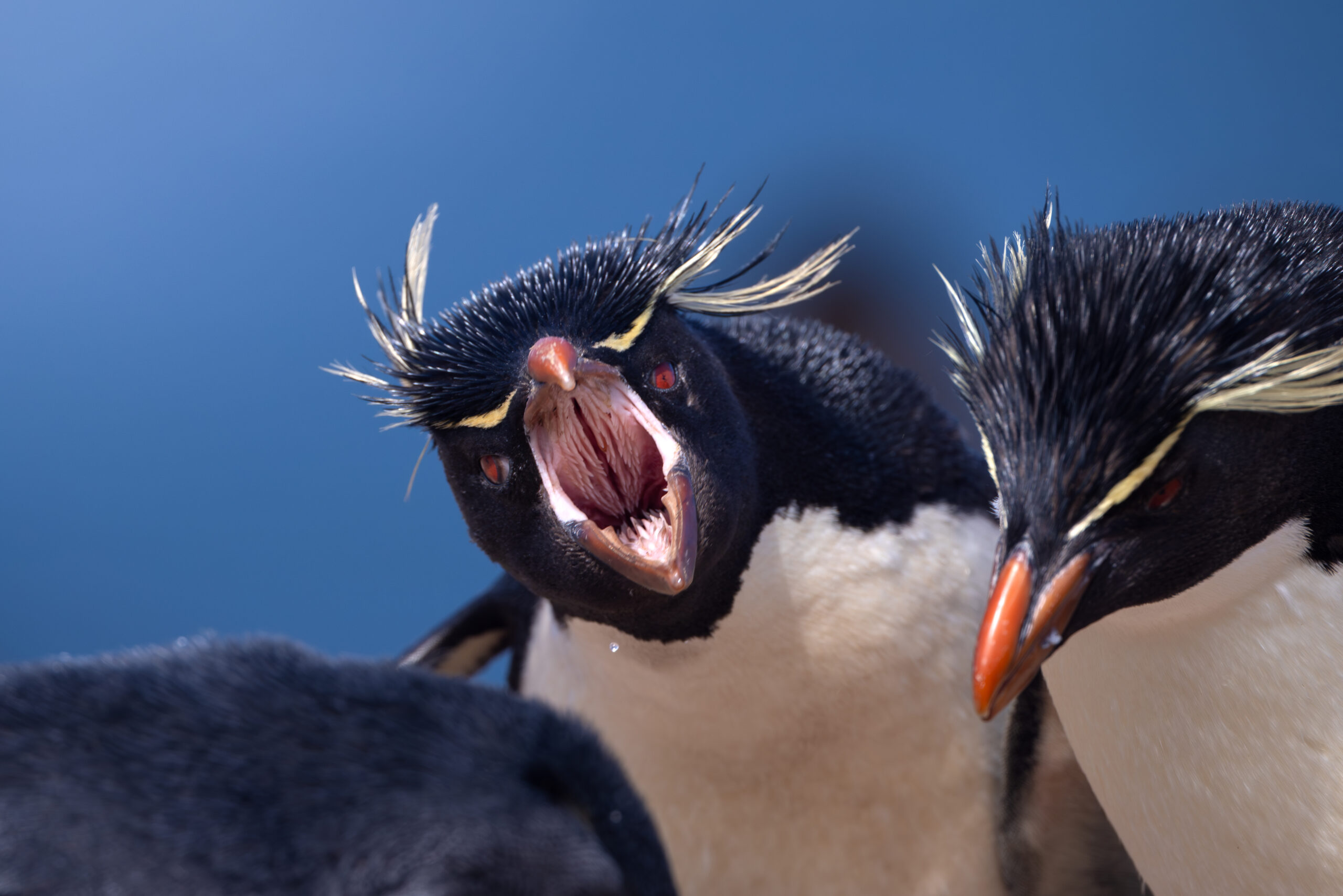
- Rockhopper Penguins: Feisty, yellow-crested daredevils that bound up steep, jagged seaside cliffs with unbelievable agility.
- Macaroni Penguins: Easily confused with Rockhoppers but noticeably larger, featuring striking golden crests that sweep back from the center of their foreheads.
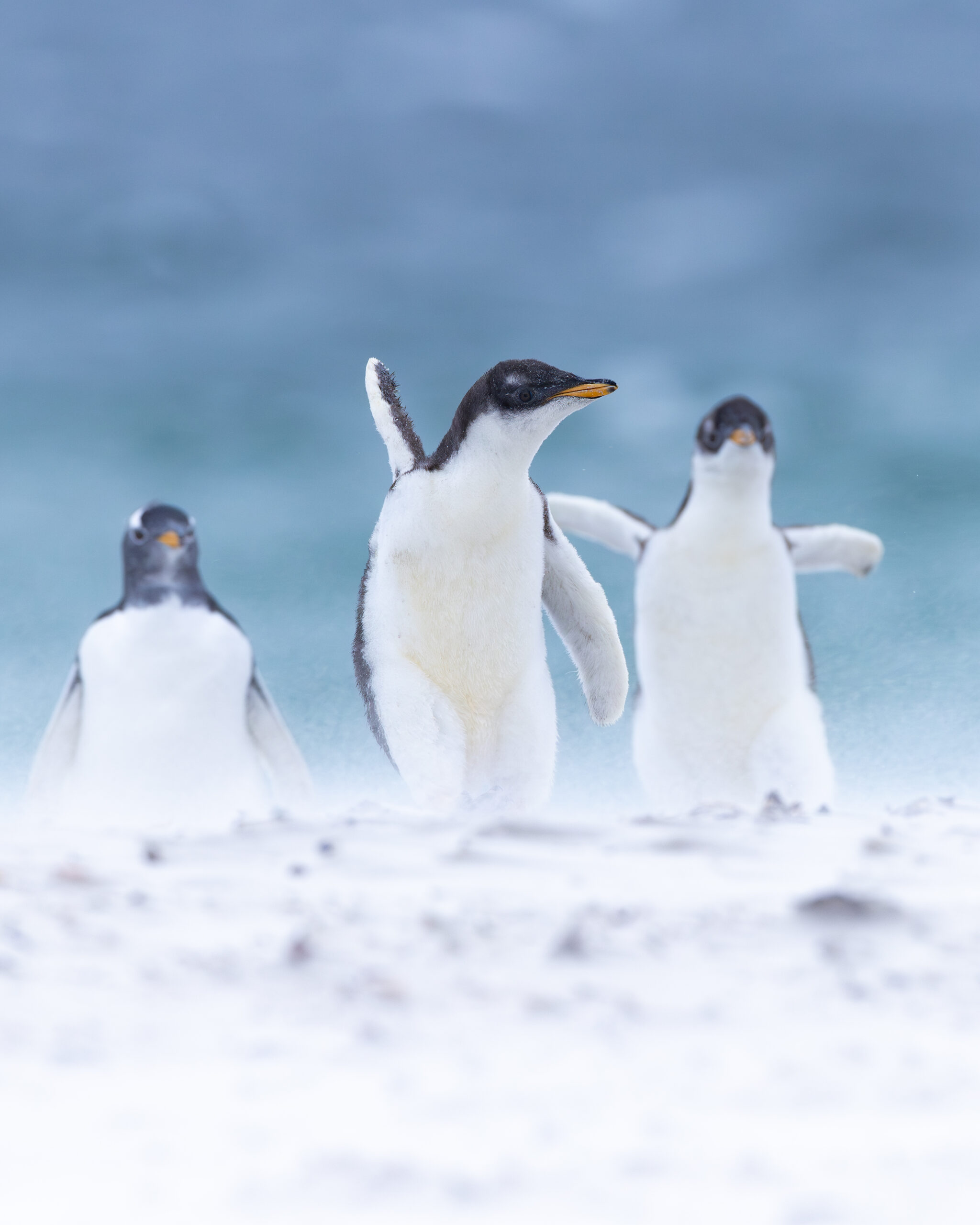
The Holy Grail: Volunteer Point
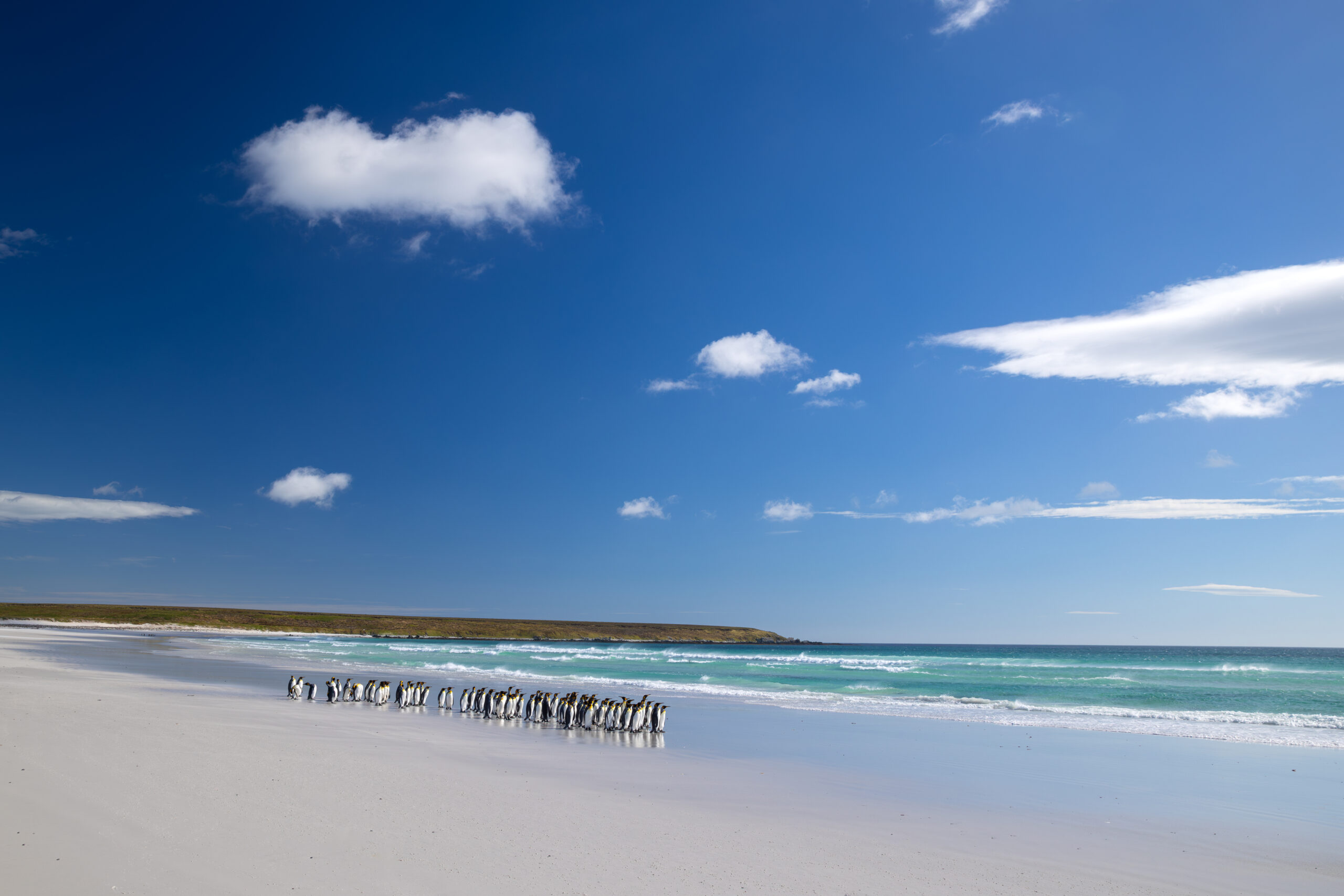
The absolute highlight of my trip was journeying to Volunteer Point, home to the largest King Penguin colony in the islands. This spectacular reserve hosts over 1,000 breeding pairs of majestic Kings, alongside thousands of Gentoos and Magellanics.
Volunteer Point is universally regarded as the premier spot to photograph King Penguins because of its striking contrast of white-sand beaches, emerald green fields, and turquoise waters. Because King Penguins have a unique 14-to-16-month breeding cycle, you can find fluffy brown chicks (often called “oakum boys”) here all year round.
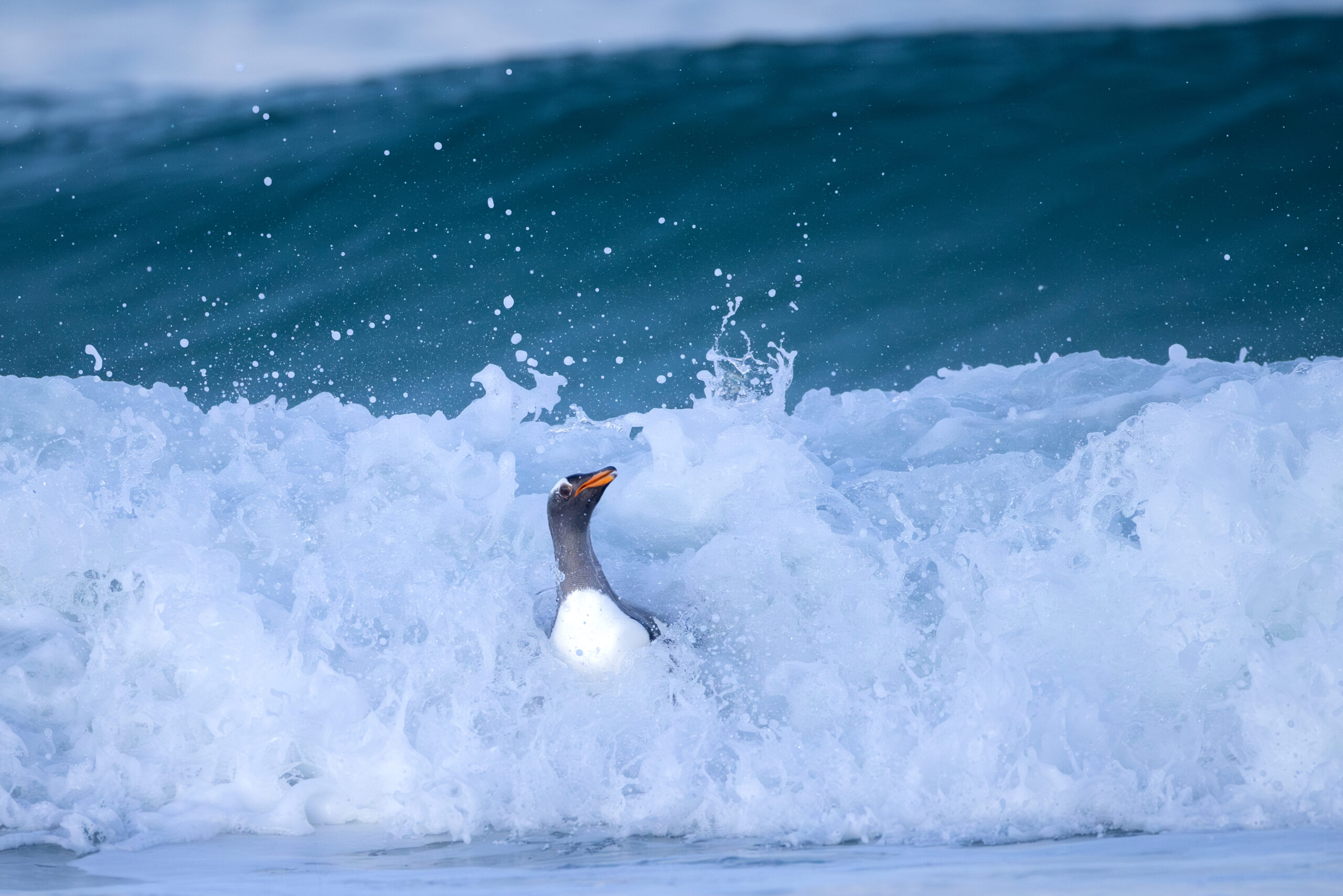
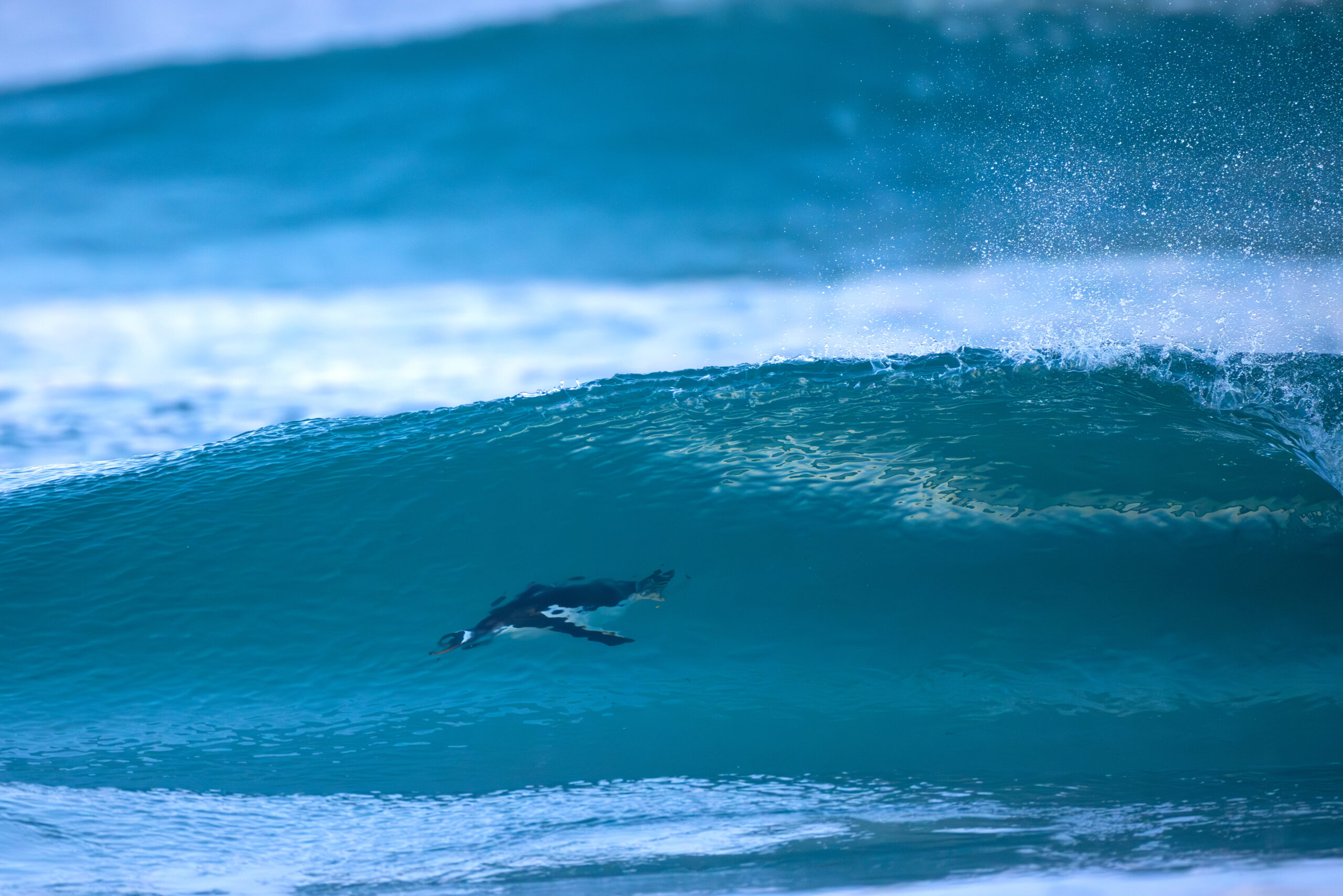
                                                  VOLUNTEER POINT OVERNIGHT STAY

 - Accommodation                  Warden's House (Hosted by local wardens)

 - Capacity                               Strictly limited to 4 guests maximum

 - Inclusions                             Full home-cooked catering and shared bathroom facilities|

 - Photography Advantage    Exclusive access to colonies during late-evening and
                                                early-morning golden hours after day-trippers depart

  - Booking Window                 Must be reserved 6 to 12 months in advance
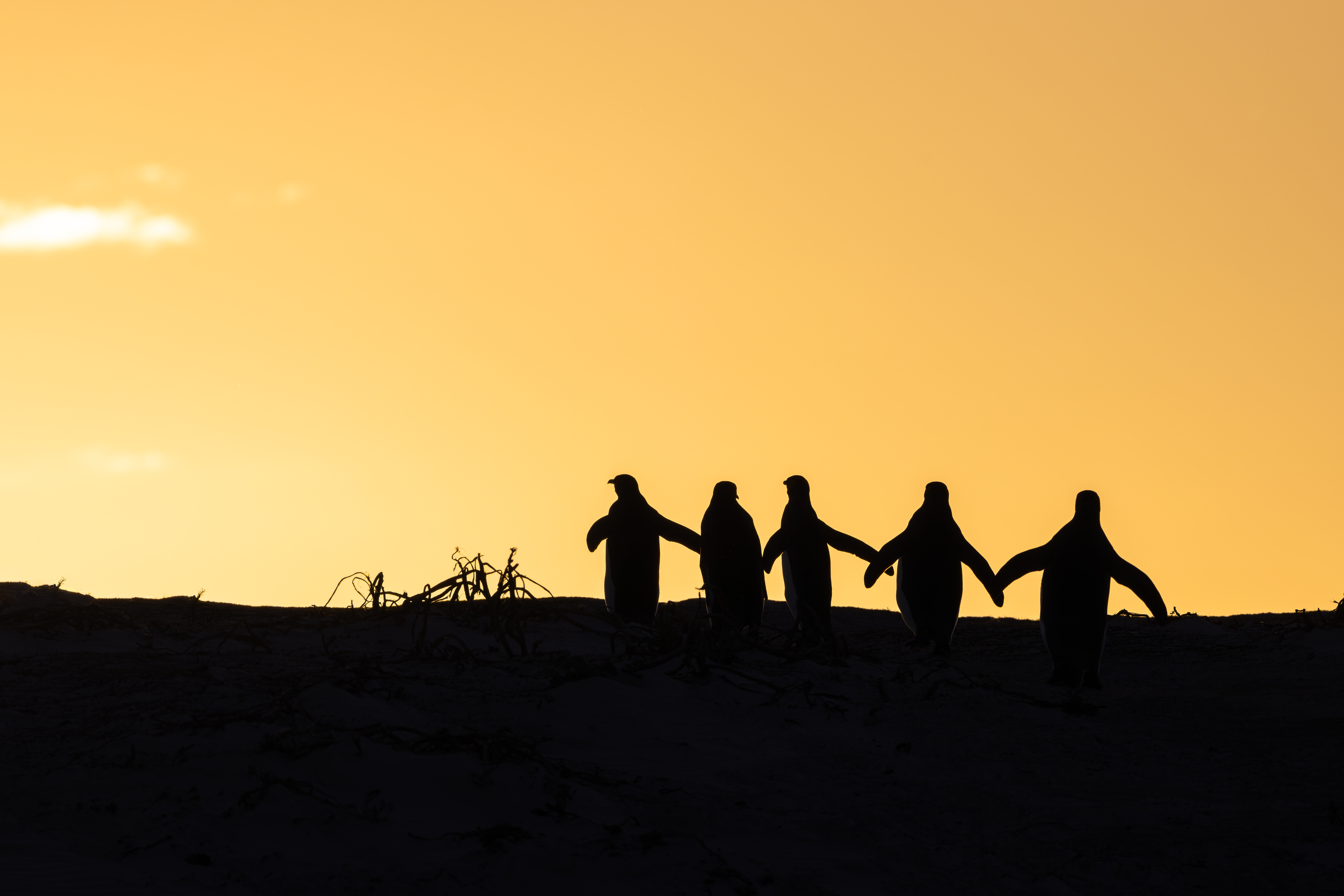
Staying overnight means you have the entire landscape to yourself once the daytime 4×4 convoys depart. Watching the sun dip below the South Atlantic horizon while thousands of King Penguins call out around you is a profound experience for any visual storyteller.
Weather
Photographing in the Falklands requires a deep respect for the elements. The main travel and wildlife season runs during the Southern Hemisphere’s warmer months, from October to April, with November through February serving as peak wildlife viewing time.
Even in February the height of the summer the weather is famously mercurial. The islands are dictated by a fierce maritime climate, meaning you can easily experience all four seasons in a single afternoon. One hour you are shooting in bright, harsh sunshine; the next, the wind fiercely whips across the plains, bringing sideways rain or sudden drops in temperature. Packing heavy layers and utilizing the reliable weather-sealing of my Canon gear was absolutely mandatory to survive the elements.
The People: Modern Island Life
Beyond the wildlife, the heart of the Falklands lies within its community. The local population affectionately known as “Islanders” is incredibly small, numbering fewer than 4,000 people. Approximately 80% of the population lives in the capital city of Stanley, which is located on East Falkland. Many families have lived on the islands for nine generations or more, tracing their roots back to British farming pioneers.
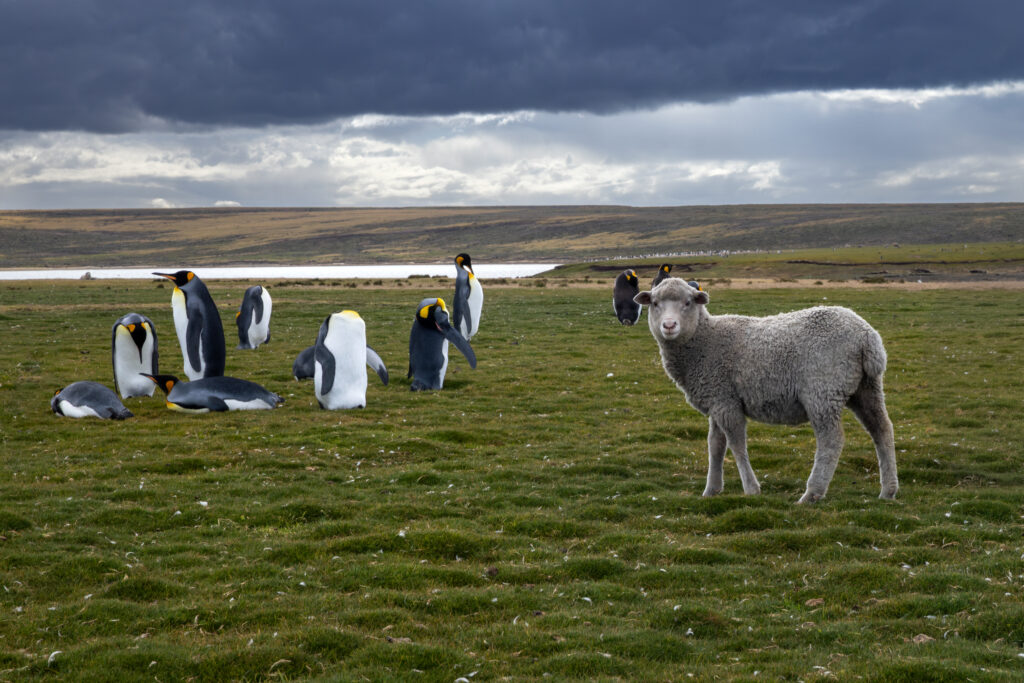
Life outside of Stanley is referred to as living in “Camp” (derived from the Spanish word campo for countryside), where sheep farming remains a traditional way of life. The people are exceptionally warm, fiercely independent, and renowned for their genuine, small town hospitality. Everywhere I traveled, I was welcomed with hot tea, home baked goods, and captivating stories about island life.
Conclusion
Looking back on my time in the Falklands, I am filled with an overwhelming sense of gratitude. To stand on a remote beach at the bottom of the world, hearing nothing but the crashing waves and the trumpeting chorus of thousands of penguins, is something I will carry with me forever.
This collaboration with the Falkland Islands Government allowed me to document a fragile, beautiful ecosystem that few people ever get to see in person. Leaving the islands with memory cards full of images and a soul full of wonder, I am deeply thankful for the privilege of experiencing this untamed paradise.
If you plan on visiting the Falkland Islands, booking a local guide or 4×4 excursion is essential for seeing penguins. Most prime colonies sit on isolated, private farmland and require rugged, off-road driving to reach.
Additional Images
Follow along for more wildlife encounters, photography stories, and future tours!